How should you store your shamisen? A question that comes to every player’s mind sooner or later. Of course, you want to take good care of your instrument not only while playing but also afterwards. Fortunately, the shamisen is relatively easy to maintain—especially if you have a sturdy case.
The Options
Basically, there are three main ways to store a shamisen:
-
- laying it down
- standing it up
- hanging it up
None of these is fundamentally better or worse than the others. The shamisen doesn’t care whether it’s lying, standing, or tilted sideways. The best option depends on how much space you have and what you find visually pleasing.
The Common Ground
No matter how you store your shamisen, there’s one rule that always applies: remove the koma after playing. (Check out my super compact tutorial: How to remove the koma properly.) Then wipe the neck and fingerboard with a soft cloth to remove fingerprints that could damage the wood over time. If your shamisen has a natural skin, place the dou in a washi cover to protect it from humidity. In most parts of Germany, the climate is dry and stable enough that a shamisen can last without one—but if your home’s climate fluctuates, a washi cover adds peace of mind.
Next, place the instrument in a soft cloth cover—either a doubukuro, which protects the dou from dust, or a nagabukuro [see article on how to put on a nagabukuro properly]. If you don’t have one, a soft cotton scarf or towel works fine as a substitute.
Location and Room Climate
Regardless of whether it’s lying, standing, or hanging, your shamisen should have a comfortable spot:
away from direct sunlight, radiators, or damp walls.
Natural materials like wood and skin react to humidity and temperature changes—too much of either can cause cracks.
A good rule of thumb: if you’d be comfortable spending the day there without freezing or overheating, your shamisen will be, too.
away from direct sunlight, radiators, or damp walls.
Natural materials like wood and skin react to humidity and temperature changes—too much of either can cause cracks.
A good rule of thumb: if you’d be comfortable spending the day there without freezing or overheating, your shamisen will be, too.
Laying Down
If you have the space, laying the shamisen flat is perfectly fine.
The surface should be stable and even to prevent slipping or falls.
I often place mine on the piano—there’s always space, and it stays out of the sun.
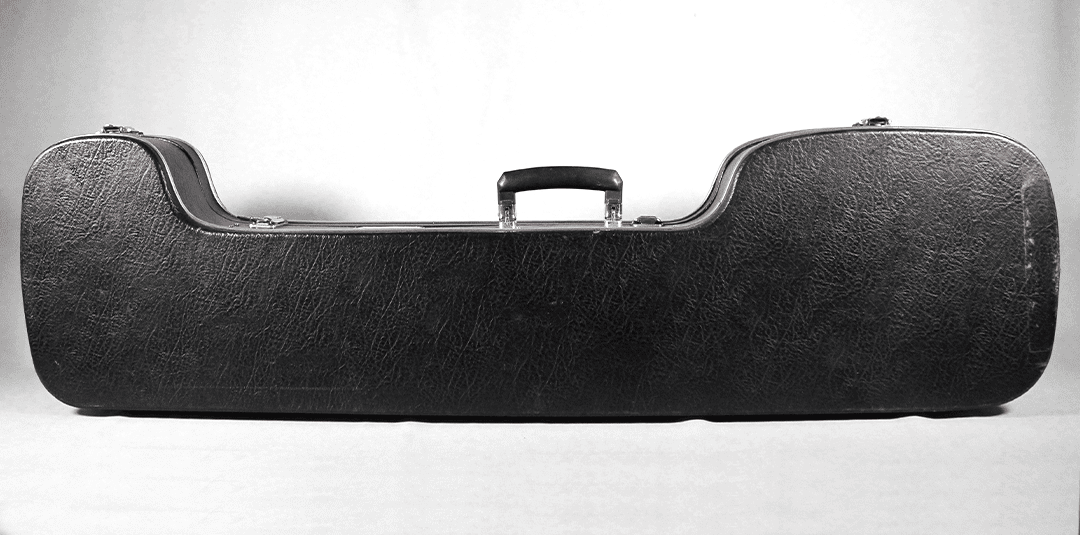
The safest option, however, is to keep it in its instrument case. You can leave the case open for quick access or closed if you have kids or pets to prevent accidents.
Once inside the case, the instrument is fully protected, no matter the position—lying flat, on its side, or standing up against a wall.
The surface should be stable and even to prevent slipping or falls.
I often place mine on the piano—there’s always space, and it stays out of the sun.
The safest option, however, is to keep it in its instrument case. You can leave the case open for quick access or closed if you have kids or pets to prevent accidents.
Once inside the case, the instrument is fully protected, no matter the position—lying flat, on its side, or standing up against a wall.
Hanging Up
If you have sturdy walls, you can hang your shamisen. Many guitar wall mounts work well for this.
The instrument rests on the chibukuro (the curve at the start of the neck).
Make sure the hook’s fork is narrow enough for a secure fit—some guitar mounts are too wide. Ukulele or violin wall hooks often fit better, depending on your shamisen’s neck width.
Older hosozao models can have necks as narrow as 24 mm, while futozao can reach up to 34 mm.
The instrument rests on the chibukuro (the curve at the start of the neck).
Make sure the hook’s fork is narrow enough for a secure fit—some guitar mounts are too wide. Ukulele or violin wall hooks often fit better, depending on your shamisen’s neck width.
Older hosozao models can have necks as narrow as 24 mm, while futozao can reach up to 34 mm.
For maximum safety, hang the shamisen with its front facing the wall.
This keeps it parallel to the wall and reduces the risk of it being bumped.
Some prefer to hang it facing forward for display—this looks nice but is slightly less secure. Personally, I always prioritize safety over looks.
This keeps it parallel to the wall and reduces the risk of it being bumped.
Some prefer to hang it facing forward for display—this looks nice but is slightly less secure. Personally, I always prioritize safety over looks.
Standing Up
Storing the shamisen upright in a stand is both practical and visually pleasing.
It lets you admire the instrument and grab it easily to play.
The downside: you can accidentally bump into it and knock it over.
It lets you admire the instrument and grab it easily to play.
The downside: you can accidentally bump into it and knock it over.
A guitar stand is usually too wide since the shamisen’s body is much thinner.
If you play a futozao (like a Tsugaru shamisen), it might fit, but usually sits at a slight angle.
It’s safe, but not ideal. Ukulele or violin stands are often better suited.
If you play a futozao (like a Tsugaru shamisen), it might fit, but usually sits at a slight angle.
It’s safe, but not ideal. Ukulele or violin stands are often better suited.
I tested several models and have a favorite that I can recommend as the most practical stand for shamisen. Check out the article “Shamisen Stands Compared” – including an overview and an accompanying video.
Watch the video here:
Check out the YouTube video version of this article if you prefer hearing and watching over reading.