A Note on Maintenance
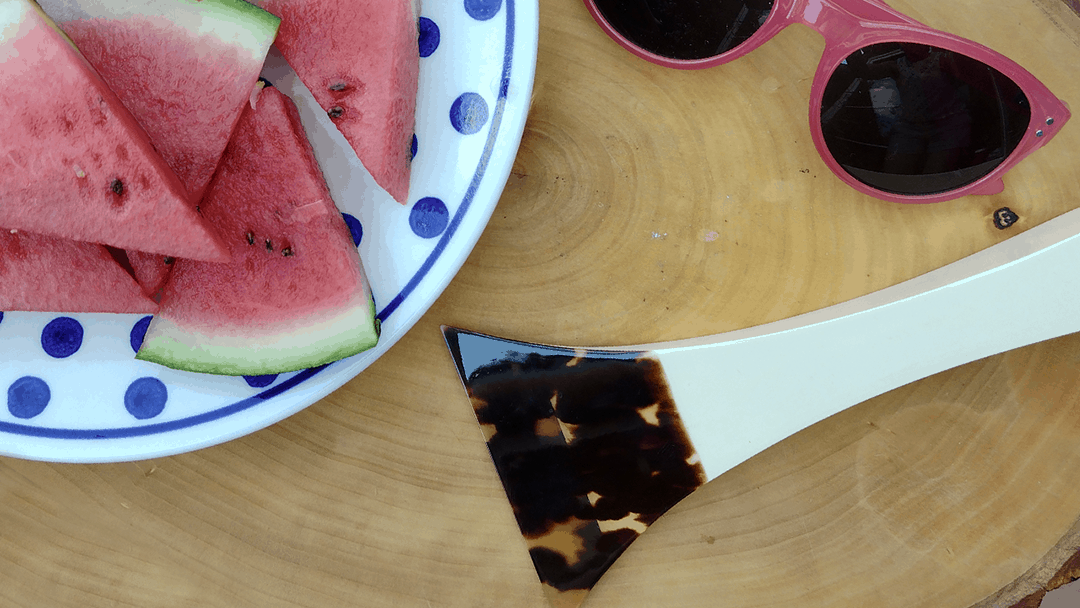
Even if you ignore all care advice, leave the koma on, store your shamisen by the window, and never wipe it down — it won’t immediately fall apart. It won’t crack or crumble under your fingers overnight. What I share are simply best practices, drawn from experience, to help you give your instrument the best possible care. That doesn’t mean you’re neglecting it if you do things differently.
Heat
Indoors, keep your instrument in a cool, stable environment. Shamisens dislike extremes — and even more so, sudden contrasts. Both wood and skin expand and contract with changes in temperature and humidity, and these shifts cause tension that can eventually tear the skin. Avoid such extremes whenever possible.
Humidity
To prevent sweat from reaching the skin, place a thin layer of fabric between yourself and the shamisen. If you’re out and about, your cleaning cloth works perfectly for this purpose — it’s always in your case anyway.
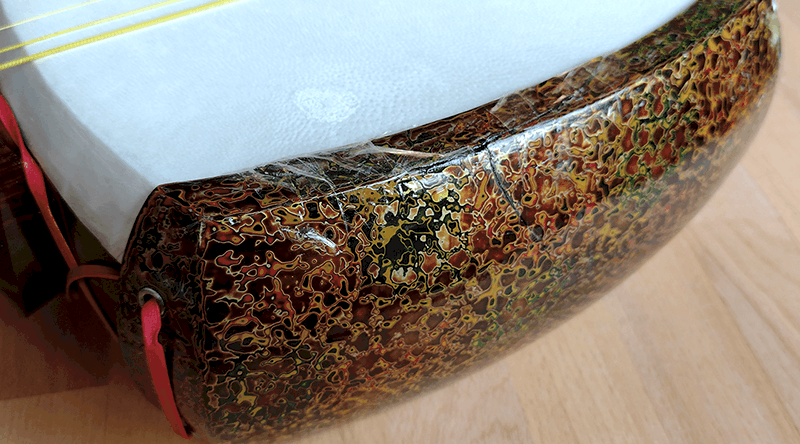
As beautiful as the dōkake is, it doesn’t protect the back skin.
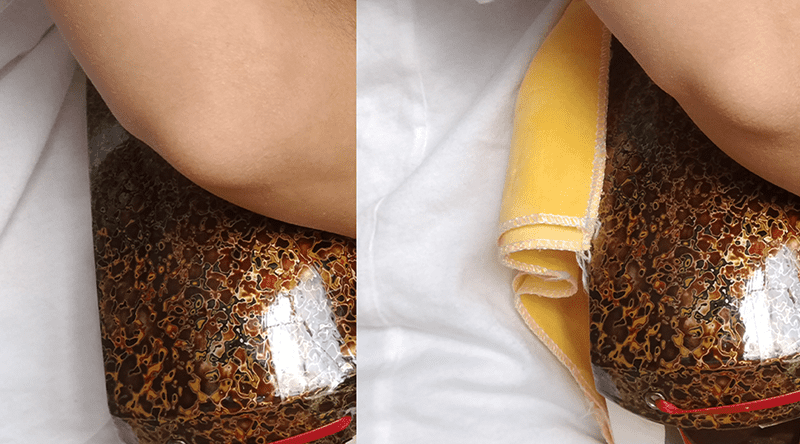
Simply place a cloth between your body and the instrument.
Clothing
Direct skin contact should be avoided since sweat and natural oils shorten the skin’s lifespan. Also, beware of belt buckles, buttons, or zippers — they can scratch or tear the skin. A simple cloth barrier solves all of this.
Bachi
Sweaty hands can make the bachi slippery. If your bachi doesn’t have a wooden grip, it can easily slip while playing. Once it starts sliding, you may grip it too tightly to compensate, which only makes things worse.
In the worst case, it could fly out of your hand mid-song and shatter on the floor. Even a chipped corner is frustrating.
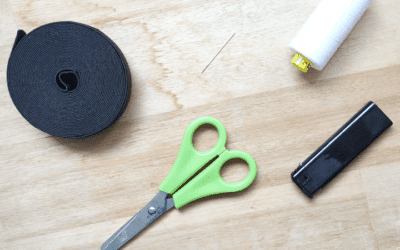
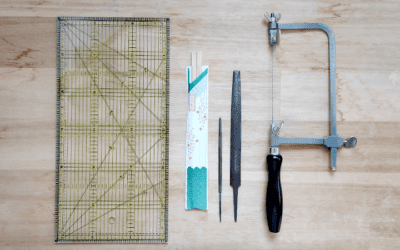
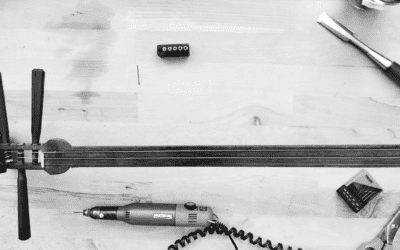
Fortunately, there are rubber sleeves made specifically for bachi handles. You can also make your own using a piece of old bike inner tube and a hole punch. Alternatively, you can wrap the handle with kinesio tape or a thin grip tape (like those for tennis rackets or bicycle handlebars). It’s quick, cheap, and immediately effective.
Image description:
Left: original grip; right: DIY bachi sleeve.
Kinesio tape to the rescue — narrow tape is easiest to handle.
Aftercare
Because we sweat more through our fingertips in summer, it’s especially important to wipe down the sao after each session. You’ll often notice faint matte marks on the neck where your fingers have been.
Use a soft cloth and firmly rub along the neck a few times — it will keep the wood looking beautiful for years. Also, don’t forget to wipe down your bachi — sweat is not just moisture but also slightly acidic, which can damage materials over time.
With these tips, you and your shamisen can enjoy a safe and happy summer.
Broken Bachi?
Has your bachi fallen or cracked? Or does it just not feel right in your hand? Browse the shop for bachi of all styles — and if you’re looking for something special, send an email. There are more treasures waiting in storage!
Need a Cleaning Cloth?
Get an original Japanese Tsuyafukin! Its wonderfully soft surface thoroughly cleans your shamisen and polishes it to a shine every time you play — completely free of chemicals and fully machine washable.
You said:
provide me with a key phrase and meta description for SEO in german and english
ChatGPT said:
Here are optimized options for your Shamisen-Tuning Overview Page (based on your earlier context with three tunings and audio samples):
Deutsch
Keyphrase: Shamisen Stimmungen erklärt – Honchoshi, Niagari, Sansagari
Meta-Beschreibung:
Erfahre alles über die drei Shamisen-Stimmungen Honchoshi, Niagari und Sansagari. Höre Klangbeispiele jeder Saite und verstehe, wie sich die Stimmungen auf den Charakter des Instruments auswirken.
English
Keyphrase: Shamisen tunings explained – Honchoshi, Niagari, Sansagari
Meta Description:
Learn about the three shamisen tunings: Honchoshi, Niagari, and Sansagari. Listen to sound samples of each string and explore how different tunings shape the instrument’s character.
Would you like the phrasing to lean more educational, musical/atmospheric, or SEO-optimized for beginners (e.g. “what are shamisen tunings”)? I can adapt both languages accordingly.
You said:
i wanted suggestions for the article you just translated. my original meta desciption for keywords “sommer shamisen” is: Um auch im Sommer eine glückliche Shamisen zu haben, sollte man besonders auf Hitze und Feuchtigkeit achten und wissen, wie man damit umgeht.
ChatGPT said:
Great — your original German meta description is strong. To give you enhanced options for both German and English, here are refined versions with focus keyphrases included:
German
Focus Keyphrase: Sommer Shamisen
Meta Description:
„Sommer, Hitze & Schwitzen? Erfahrt, wie ihr eure Shamisen vor Feuchtigkeit und Temperaturwechseln schützt – für sorgloses Spielen auch in der warmen Jahreszeit.“
English
Focus Keyphrase: summer shamisen
Meta Description:
„Summer weather, heat & humidity? Learn how to protect your shamisen from moisture and temperature swings so you can play confidently all season.“
If you like, I can check character count and optimize for mobile SERP preview as well.
You said:
i made it this: Sommer, Hitze, Shamisen – Erfahrt, wie ihr euer Instrument in der heißen Jahreszeit vor Feuchtigkeit und Temperaturwechseln schützt.
ChatGPT said:
That’s an excellent revision — concise, readable, and keyword-rich. It stays well under Google’s 160-character limit and places the main keyword “Sommer, Hitze, Shamisen” right at the front for strong SEO weight.
If you want to mirror it in English for your bilingual setup, here’s a matching version:
Summer, heat, shamisen – learn how to protect your instrument from humidity and temperature changes during the hot season.
Would you like me to check both for tone consistency and flow across German and English?
ChatGPT can make mistakes. Check important info.
Bachi
In the worst case, it could fly out of your hand mid-song and shatter on the floor. Even a chipped corner is frustrating.
Fortunately, there are rubber sleeves made specifically for bachi handles. You can also make your own using a piece of old bike inner tube and a hole punch.
Alternatively, you can wrap the handle with kinesio tape or a thin grip tape (like those for tennis rackets or bicycle handlebars). It’s quick, cheap, and immediately effective.
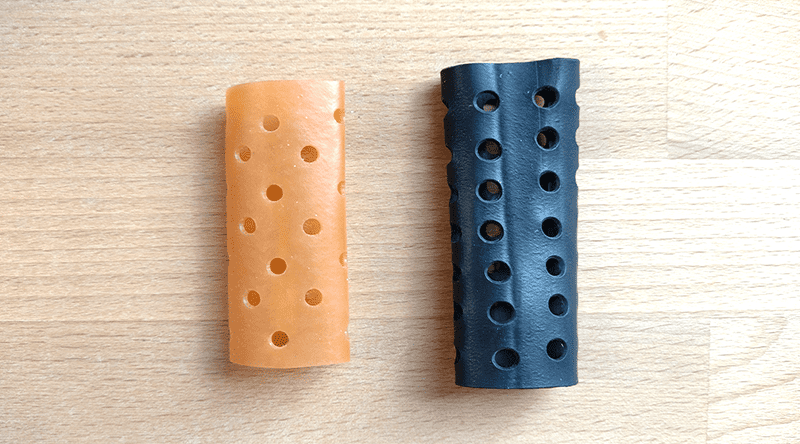
Left: original grip; right: DIY bachi sleeve.
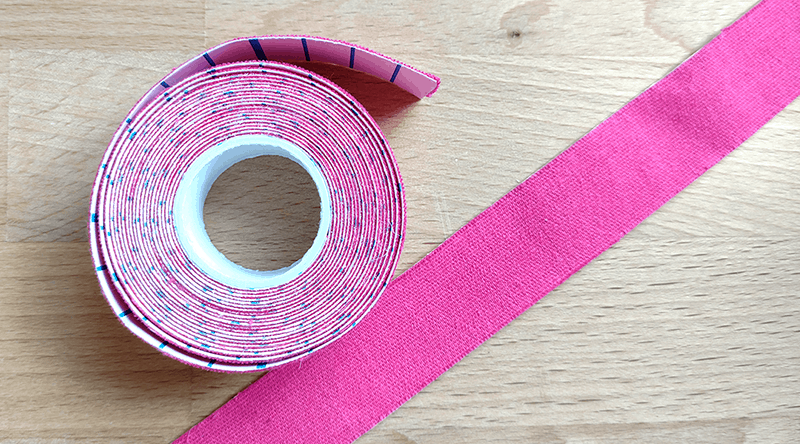
Kinesio tape to the rescue — the narrow kind is easiest to handle.
Care
Use a soft cloth and firmly rub along the neck a few times — it will keep the wood looking beautiful for years. Also, don’t forget to wipe down your bachi — sweat is not just moisture but also slightly acidic, which can damage materials over time.
With these tips, you and your shamisen can enjoy a safe and happy summer.
Broken Bachi?
Has your bachi fallen or cracked? Or does it just not feel right in your hand? Browse the shop for bachi of all styles — and if you’re looking for something special, send an email. There are more treasures waiting in storage!
Need a Cleaning Cloth?
Get an original Japanese tsuyafukin! Its wonderfully soft surface thoroughly cleans your shamisen and polishes it to a shine every time you play — completely free of chemicals and fully machine washable.
Watch the video here: