Sometimes Things Shouldn’t Go Too Smoothly…
For the Tsugaru style, the basic position looks like this: you clamp the dou firmly between your right forearm, thigh, and ribcage, with the neck angled at about 45˚. The left hand should not be involved, so it stays free to play.
What inevitably happens: the shamisen slips, sags, or sits at a bad angle. The corner of the dou that rests on your thigh is smooth and doesn’t give much grip. Attempts to hold a proper position usually result in a hunched back, tense shoulders, and a restricted range of motion in the arms (your face will soon only know the spectrum between “sad” and “desperate”…).
The Dougomu
Alternative 1: Anti-Slip Mat
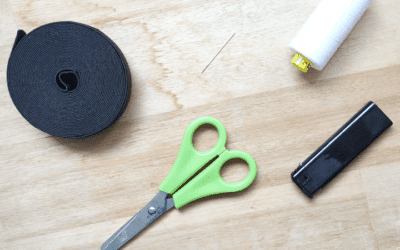
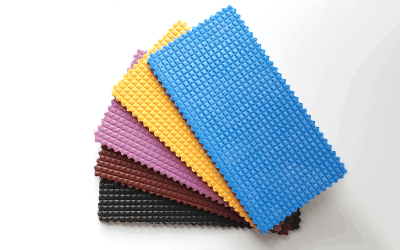
I’ve tried homemade anti-slip mats cut from household shelf liner. You can find rolls of foam mesh in the home section for very little money, and cut yourself a pad with scissors. A size of about 10×15 cm works well — big enough for grip without looking oversized.
But if you move around a lot, stand up, or gesture while playing, the downside is obvious: these mats slip off your thigh easily because the material is so lightweight. Personally, I find it annoying to reposition the pad every time I sit down — but you could also treat that as a little ritual to start your practice.
You can attach it permanently with double-sided tape. In that case, use smaller dimensions so nothing sticks out beyond the dou. The only problem: you’ll have leftover material. Best to share with friends who play shamisen — otherwise, it feels wasteful.
Alternative 2: Emergency Fix with Shoe Insole Pads
They’re a little smaller than a commercial dougomu but big enough to work. The adhesive is extremely gentle — no damage, no residue on your shamisen. In fact, it’s so gentle that the curve of the dou can make the pad peel itself off. So, not a permanent fix, but perfect in an emergency when you’ve forgotten or lost your pad.
They stick on in seconds and give great grip. After playing, you can put them back on their backing sheet and reuse them — either for your shamisen or for your shoes (or give them to someone who wears open-heeled shoes with straps!).
Alternative 3: Natural Materials
For vegan players, natural rubber is the top option. It’s harder to find, but if you source it, you’ll have a durable and eco-friendly solution. Be cautious though: rubber is often not harvested sustainably. If you know a good source, let me know in the comments — I’d be happy to recommend it here.
I’ve also tried other natural materials like cork, but the dou just slides off. Recently I discovered a clever new device that I’m still researching — stay tuned!
Materials Compared
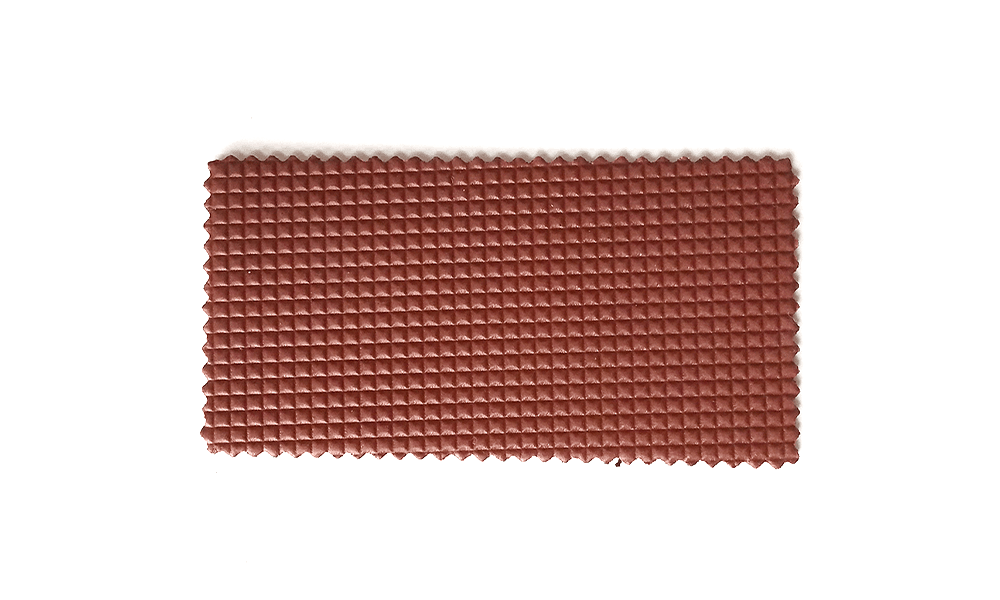
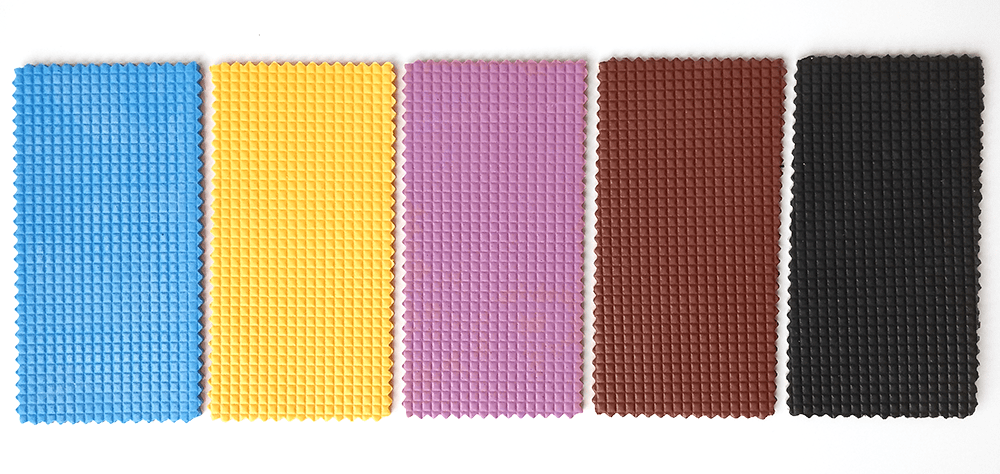
Dougomu, self-adhesive
+ instrument is always ready to play
+ best anti-slip performance
– can leave adhesive residue
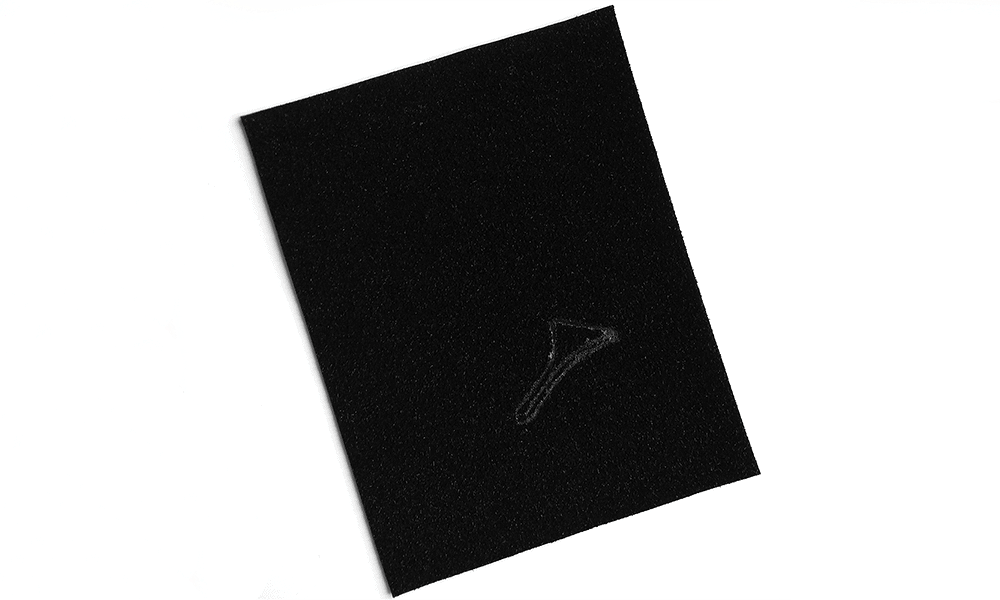
Dougomu, loose / Hizagomu
+ best anti-slip performance
– can fall off or get lost
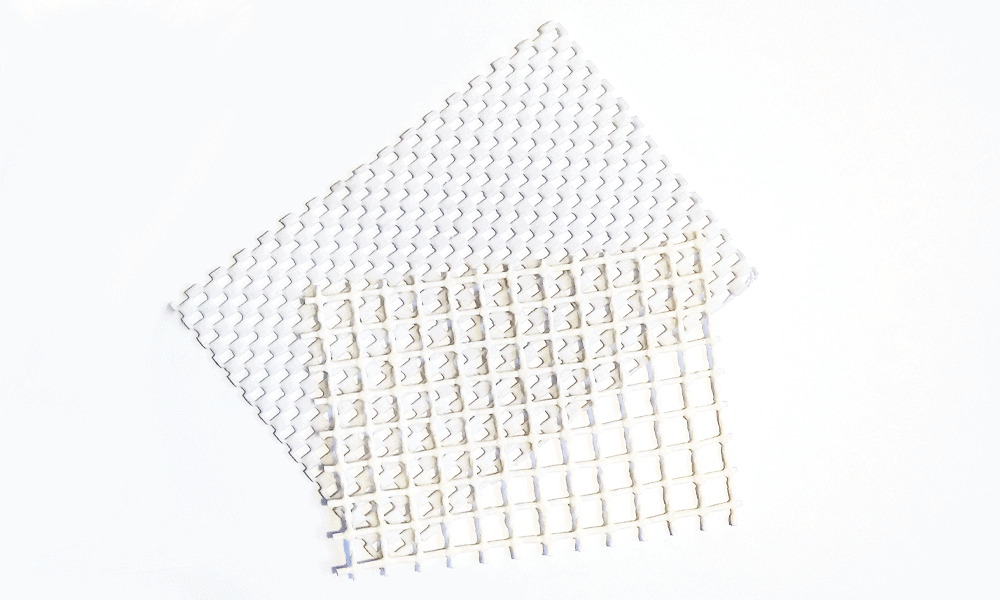
DIY Anti-Slip-Mat
+ easy to source materials
– slips off thigh easily due to lightweight
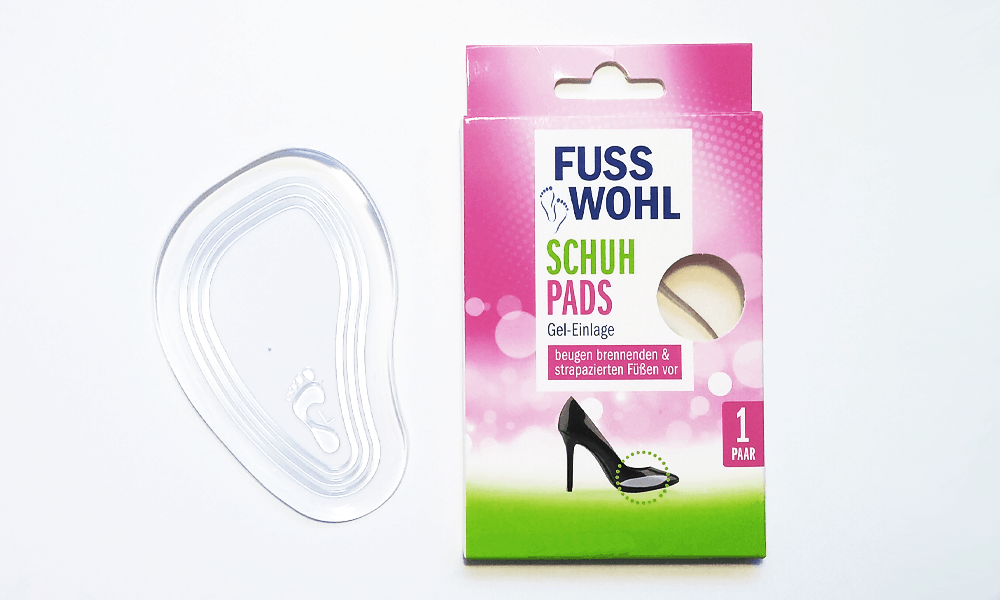
DIY self-adhesive Shoe Pad
+ available in any drugstore
+ very gentle adhesive
– not a long-term solution due to weak adhesion
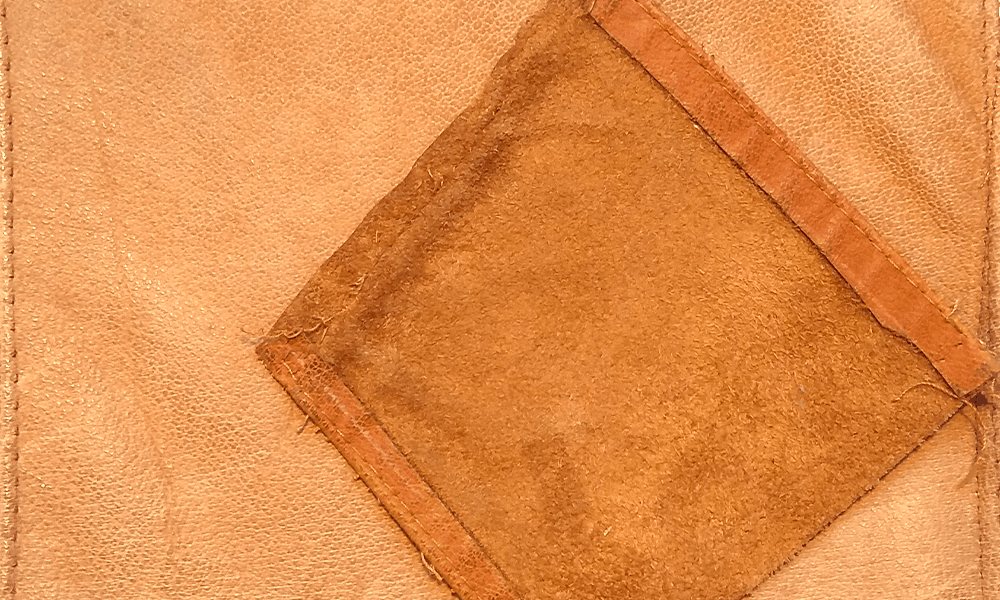
DIY Leather
+ natural material
+ very durable
– more expensive
– only moderate grip
Placement and Attachment
In Tsugaru style, the shamisen is held at a steep angle (sao about 45˚ to the floor). That means the balance point sits very close to the lower corner of the dou. So the dougomu should be placed around that corner, as close to the back of the dou as possible.
It doesn’t harm the skin if the pad overlaps a bit onto it (on the side, not the back).
If there are old adhesive marks, clean them as best you can. If some residue stays, you can still stick the new pad on top — the adhesive is strong enough.
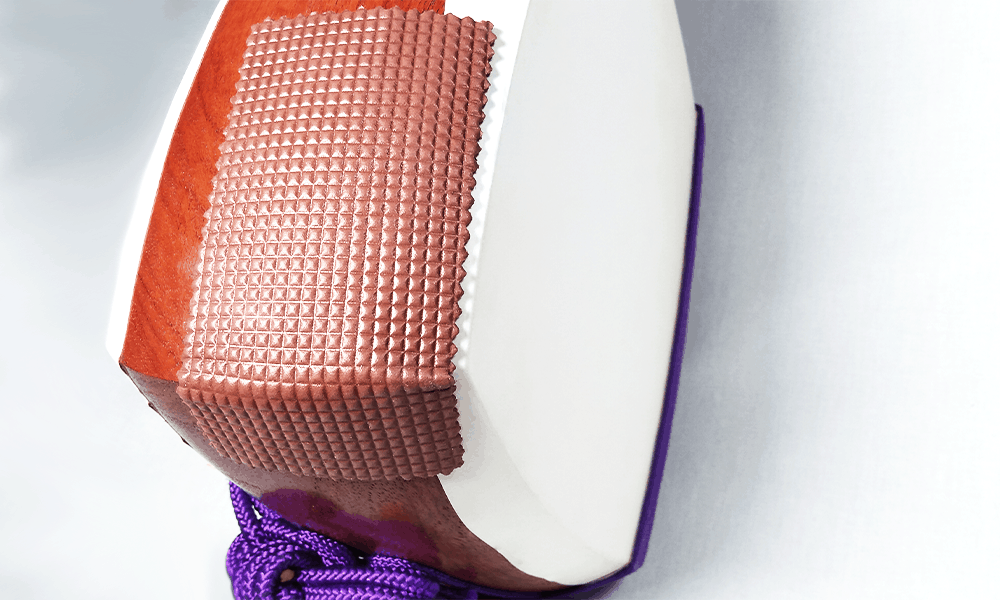
I usually attach the pad about one-third around the short edge and two-thirds along the long edge. The shamisen is never balanced directly on the short edge, so just a little coverage there is enough. If you only stick it along the long edge without wrapping it around the corner, it tends to peel off and won’t give the same grip.
Play Relaxed
Whichever option you choose, the important thing is not to suffer with a slipping instrument that brings tension, strain, and frustration.
If you discover good material alternatives for making your own non-slip pad, let me know in the comments — I’d love to add them here or even create a follow-up article if enough suggestions come in.
Enjoy playing and experimenting!
Watch the video here: