Slipping Pegs and Constant Retuning
If your tuning pegs frequently slip or your strings keep going out of tune, you’re in the right place. It all comes down to technique. In the worst case, improper tuning can even result in a broken peg. Here, I’m sharing my tips on how to tune your instrument quickly, securely, and reliably while ensuring a stable tuning.
Compared to many other instruments, the shamisen is notorious for requiring frequent retuning. The wood reacts to weather changes, making the pegs more or less cooperative depending on the conditions. Old or poorly fitted pegs can also cause instability. Even with perfectly fitted pegs, tuning is unavoidable since different pieces require different tunings. The goal is, of course, to tune the strings correctly. That much is clear. But there are hidden pitfalls: If you do it wrong, the pegs may slip, and the strings will go out of tune while playing—one reason tuning is such a headache for beginners.
The Nightmare of a Broken Peg
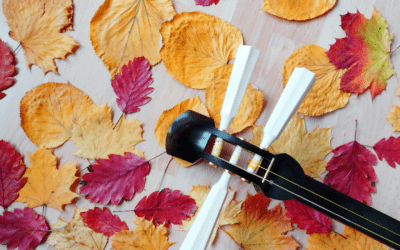
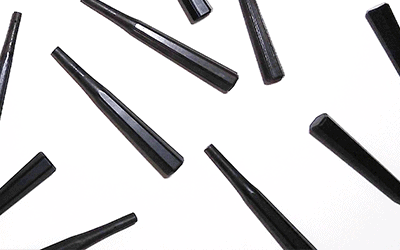
But it can get even worse: Improper handling of the instrument can result in a broken peg. This is not only a traumatic experience but also an expensive one. Broken pegs are rarely repairable, and individual pegs are generally not sold separately. Each peg is custom-fitted to its pegbox, and buying a full set can cost well over 100 Euros.
Many good reasons, then, to take tuning seriously! That’s why I wrote this article—to introduce two essential techniques that will help you tune safely and keep your instrument in great condition for decades.
The Basics: How to Tune?
It doesn’t matter whether you tune your instrument on a table, on your lap, or in some other position. The method itself is what counts. However, there is a conventional method commonly seen on stage, as well as an alternative that I find particularly useful for beginners or those with weaker hands.
Method 1: Tuning in Playing Position
The conventional tuning method is done in playing position: the shamisen rests on the thigh, the right hand holds the bachi, and the left hand adjusts the pegs. The open strings are struck individually with the bachi while the left hand turns the pegs. Always start tuning with the thickest string and then move on to the middle and finally the thinnest string. Strike the string first, then adjust the tuning. To be clear: Trying to tune a silent string makes no sense because you have no reference point for whether you’ve turned too far or not far enough. That’s why you should always strike the string first, then adjust the peg while the string is still vibrating.
Pros: Looks professional on stage, and you don’t need to reposition the instrument if you need to make quick tuning adjustments while playing.
Cons: If you haven’t mastered the balance yet, tuning in this position can feel unsteady. Also, the hands have less leverage to grip and turn the pegs, making it difficult for those with weaker hands or very thin pegs.
Important Tip: Always strike the string first before turning the peg. This helps you hear where the pitch is currently and where you need to go. If you turn the peg without listening, you might overshoot and end up endlessly adjusting back and forth.
Method 2: Upright and Frontal Tuning
Tired hands? Impatience? There are plenty of reasons why the conventional tuning method might not work for everyone. Many beginners or those with weaker hands find tuning in playing position challenging, even painful.
A simpler approach is to place the instrument upright with the strings facing you, either resting on the floor (I place it on my feet) or on your lap. Then, pluck the string with one hand while turning the peg with the other. Here too, gently push the peg into the pegbox while turning so that it sits securely once the string is in tune.
Pros: Easier for beginners. The different hand positioning allows for a better grip on the pegs, making tuning more comfortable.
Cons: The sound fades more quickly, so you have less time to adjust the peg before needing to pluck the string again.
Stability Tip: While turning the peg, gently but consistently push it into the pegbox—like tightening a screw. A common beginner mistake is turning the peg until the desired pitch is reached and then forcefully pushing it in. This doesn’t work well because it disrupts the tuning.
Instead, gradually increase the pressure as you approach the target pitch to ensure the peg stays firmly in place.
How to Avoid a Broken Peg
A peg can break much more easily than you might think. Where the peg sits inside the pegbox, it’s only about as thick as a pencil. Even slight pressure in the wrong direction can snap it. Pegs usually break when they are accidentally pushed downward while tuning—something that can happen when trying to adjust a very tight peg.
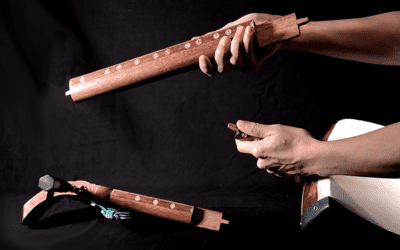
To avoid this disaster, use a simple technique: To maintain the correct angle and apply steady pressure, anchor the finger closest to the tenjin (the pegbox) inside the pegbox. This allows you to gently press the peg in without risking breakage. Use your thumb for one side and your pinky for the other. This also gives you better leverage to fine-tune the peg.
If this advice comes too late and your peg has already broken, I offer repair services—feel free to contact me! 🙂
For a visual demonstration of these tuning techniques, check out my accompanying video (linked below). And if you have any questions, drop a comment or send me an email!
For more information on shamisen tunings, check out my article on the basic shamisen tunings – it comes with an accompanying video.
Watch the video here: