The Koma – More Than a Pretty Accessory

b
Despite its small size, the koma plays a big role in playing. Read here to learn how the koma affects tone and feel.

Small but Mighty

At first glance the koma looks pretty unremarkable. But as small and fragile as it seems, you can’t play without one — and the koma’s material, shape and placement have a major effect on the instrument’s sound. It’s far more than a mere “accessory.”

What we’re dealing with

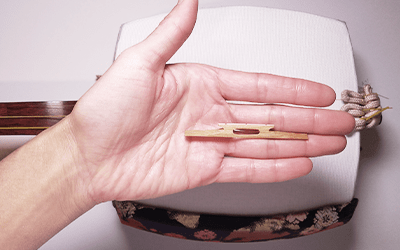
The koma is the little, movable bridge that sits on the skin of the , lifting the strings so they can vibrate and sing. The same basic idea exists on many stringed instruments, from violin to guitar. What surprises many people is that on the shamisen you normally remove the bridge after playing and only put it in place right before you begin. Once you look closely at how a shamisen is built and at the forces acting on the koma, it becomes obvious why this small extra step is worth the effort if you care about your instrument.

Wood, plastic and more

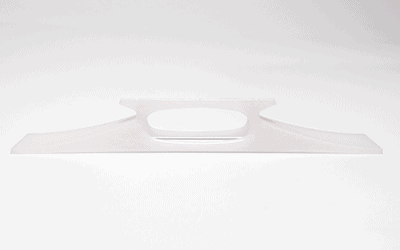
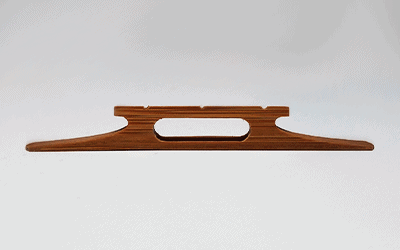
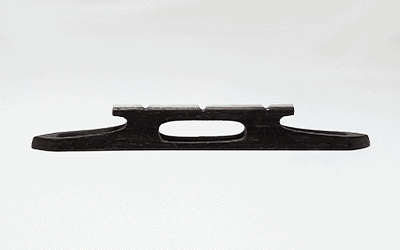
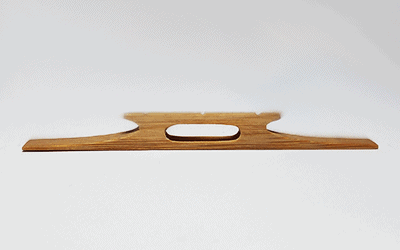
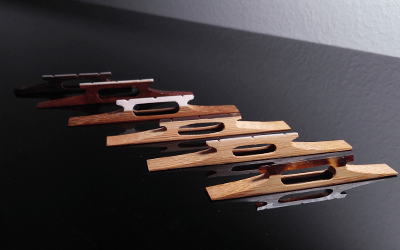
Most koma are made of plastic, bamboo or kōki — that deep, dark hardwood used for the necks of high-end shamisen.Because the top edge of the koma (where the strings run) is under high pressure, many koma have a bone edge worked into that top area, or the entire top is made of bone. There are also versions with tortoiseshell or ivory, but those are restricted outside of Japan. Tortoiseshell is common in Japan because its soft, flexible quality helps coax a particularly warm sound from the shamisen. Ivory, by contrast, is extremely hard and produces a clearer sound. Bone produces a similar bright effect while being less ethically fraught and cheaper than ivory.

Plastic

Bamboo

kōki

full bamboo

bamboo with bone inlay
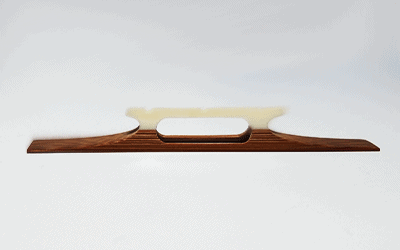
bamboo with bone

Note: Be careful with plastic koma — the top corners are very prone to chipping. Beginners often accidentally bump that edge; with a plastic koma the corner can break off quickly. If that happens you usually don’t need a full replacement right away, since there’s often still enough room to re-cut notches for the strings.

The Subtle Differences

Material and shape make a measurable difference to tone. Sometimes the change is subtle, sometimes dramatic. To find a koma that suits your sound and taste, it helps to understand how material and mass affect the skin’s vibration: the harder and lighter the contact area, the less the skin’s vibration is damped.
You can easily demonstrate the effect: strike the strings with the bachi, then strike again while gently touching the skin with your free left hand — one finger, several fingers, softly or pressing. You’ll hear the difference immediately.

Material and Size

That is exactly how the subtle manipulation of the shamisen’s sound through the koma works:
The harder the material, the clearer and brighter the sound. The narrower the koma (less surface on the skin), the clearer and brighter the sound.
Both effects come down to how much vibration the bridge absorbs. If you want a softer tone, choose a wider koma. A koma made entirely from wood will sound a touch warmer than one with a bone edge. So appearances aren’t just decoration: pretty = fine, but not necessarily best for the sound.
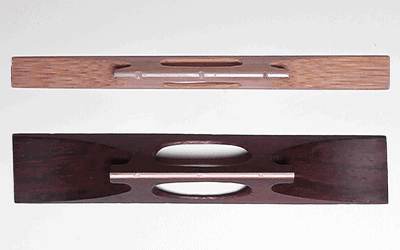
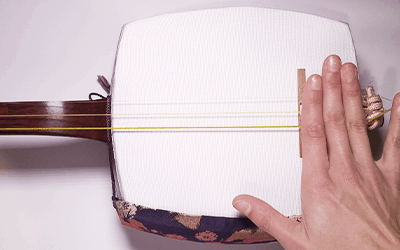
The upper koma produces a bright, strong sound.
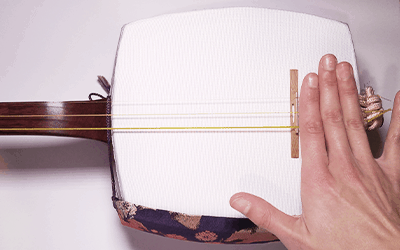
The lower koma produces a dark, warm sound.

Low or high — which feels better?

Height is another decision on top of material and width. From experience you’ll quickly discover what height suits you, because height affects feel more than tone. A low koma makes playing feel easier — the string-to-skin distance is smaller — but it can also feel like you have less control because the strings respond very readily.
Your instrument’s natural string action further constrains your choice: if the action is already very low, pairing it with a flat koma can encourage unwanted overtones; if the action is high, a high koma can make playing feel tiring. These impressions depend heavily on the player’s technique and strength, so always try different koma without prejudice when you can.

Try Before You Decide

The same koma will sound different on different instruments. A bright-sounding shamisen + a narrow, hard koma can become too cold; a warm-sounding instrument + a very wide, soft koma can become muddy. So mix and match and listen closely — and feel with your hands when it comes to height. Sometimes the change is tiny, sometimes it hits you like a revelation: the wrong koma makes the sound lifeless, the right one makes the tone bloom.
There’s no way to avoid trying out different koma to understand which one is the best fit for you and your instrument. Try it out and discover how different techniques and positions sound, how the koma shapes the sound, how the strings feel when you play. You can find a selection of koma is available in the Shami-Shop with descriptions of their tonal characteristics.
There’s no way to avoid trying out different koma to understand which one is the best fit for you and your instrument.
Try it out and discover how different techniques and positions sound, how the koma shapes the sound, how the strings feel when you play. You can find a selection of koma is available in the Shami-Shop with descriptions of their tonal characteristics.

Finding the Perfect Position

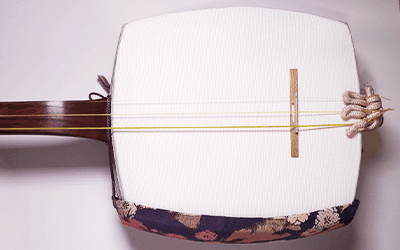
The distance between the koma and the edge of the dō affects the instrument’s roundness and resonance. There’s no formula — use your ears (or, if you don’t trust them yet, your gut). Moving the koma slightly will change the tone: it will become flatter or rounder. You don’t need to hit a mathematical “perfect” spot to enjoy playing, but the sweet spot usually sits about two to three finger-widths from the knot at the neo. On smaller bodies you’ll tend toward two fingers. It’s a good starting point that gets you very far.
If you find a position you like, mark it lightly with a pencil by tracing one or two edges of the koma on the skin — it won’t harm the skin and saves time. Fixing a position is also useful if you use position dots or a Fujaku strip on the neck: shifting the koma changes the vibrating string length (mensur) and therefore the exact positions along the neck.

Rule of thumb: about three finger-widths from the knot — but expect variation day to day.
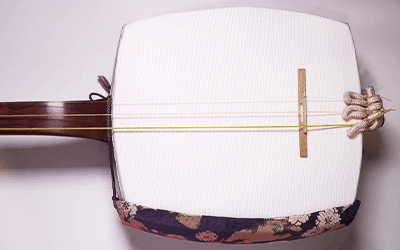
This means the spacing can vary day to day.
Inserting and Removing the Koma

The goal is place the koma two to three fingers away from the neo under the strings, with as little contact to the skin as possible.
The easiest way is to lift the strings using one or two fingers of one hand and then gently slide the koma along the strings toward the neo. Put your fingers into the gap between neck and body and lift straight up — that creates the space to maneuver the koma into place. After lowering the strings, nudge the koma into its final position.
Removing the koma works the same way: lift the strings so the koma can move, pull it gently toward the sao, slide it out sideways and then lower the strings.
You don’t need to loosen the strings to do this. Unless you plan to leave the instrument unused for a very long stretch (weeks or months), leave the strings as they are — it saves a lot of tuning time.

How to Insert the Koma — Step by Step

1. Identify the grooves on the top edge of the dō.
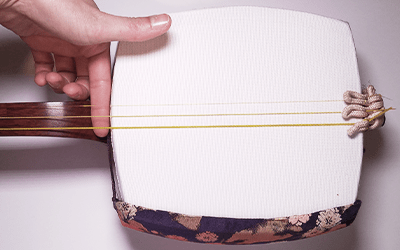
2. Slide one or two fingers into the gap between neck and body.
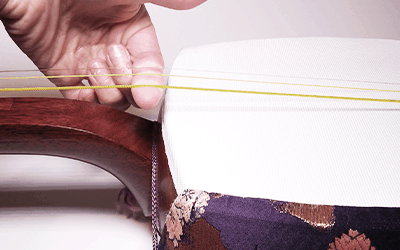
3. Lift the strings straight up.
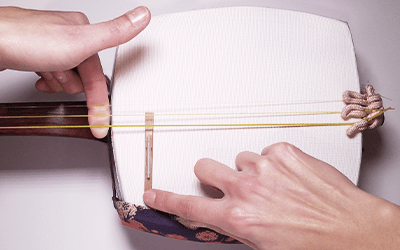
4. With your other hand, slide the koma under the strings.
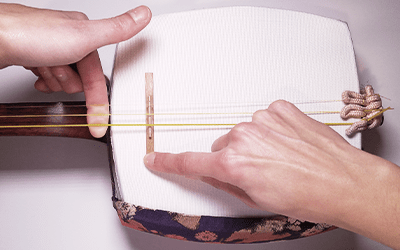
4. Place it roughly in the middle.
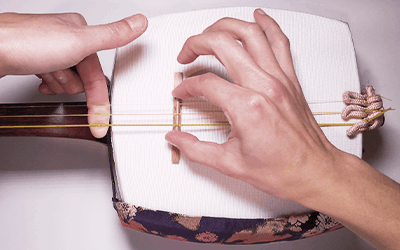
5. Hold the koma firmly between index finger and thumb.
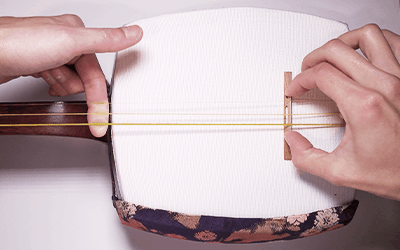
5. Pull it toward the neo with minimal skin contact.
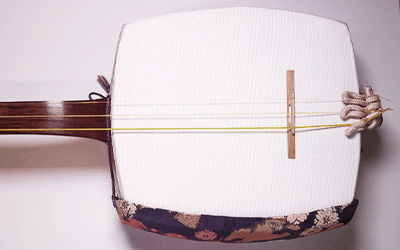
6. Lower the strings so they sit in the grooves.
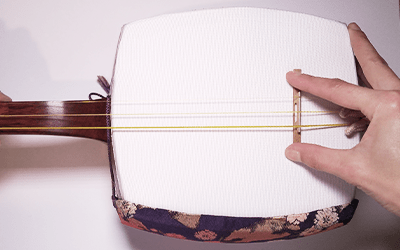
7. If needed, correct the position by gently nudging it.

How to Remove the Koma — Step by Step
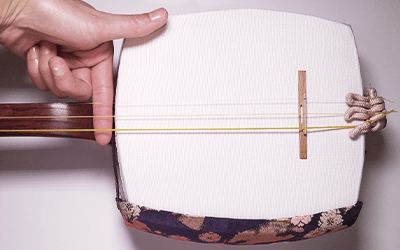
1. Slide a finger into the gap between neck and body.
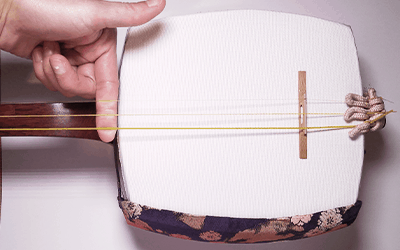
2. Lift the strings straight up.
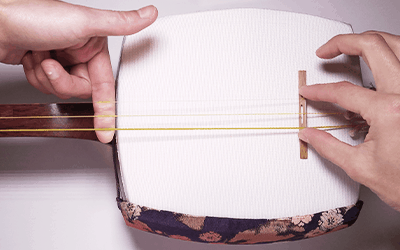
3. Grip the koma firmly between index finger and thumb.
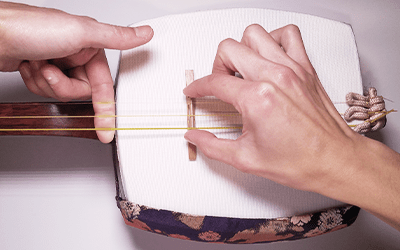
4. Pull it toward the neck with as little skin contact as possible.
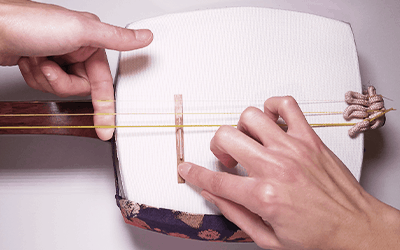
5. Slide the koma out sideways.
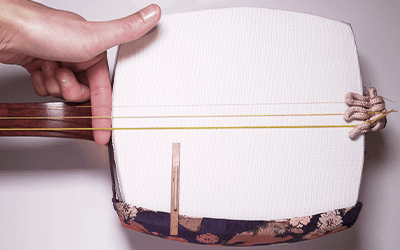
6. Lower the strings and stow the koma away.

Watch the video here:

Auch interessant: 

How to Take Apart Your Shamisen

How to Take Apart Your Shamisen

Many shamisen can be disassembled. This makes transport easier and safer. The fresher the joints, the harder it is to separate the neck. Fortunately, there are a few tricks to get it done safely.

Caring for Your Shamisen in Autumn

Caring for Your Shamisen in Autumn

Autumn brings specific challenges for the shamisen that every player should be aware of to protect and care for their instrument properly. How to deal with humidity, cold, and dry indoor air?

How to Store Your Shamisen Properly

How to Store Your Shamisen Properly

If you want your instrument to last a long time, proper storage is essential. There are several ways to keep your shamisen safe and conveniently stored when you’re not playing. Even if you have little space, you can find a good spot for your instrument.

Pin It on Pinterest

Share This