GLOSSARY

The ultimate glossary for shamisen.

This glossary provides a detailed overview of all shamisen-related terms: techniques, components, genres, theory – everything is here. A practical learning tool that makes it easier to navigate lessons, online resources, and discussions.
This is how it works
Click on a letter in the overview to jump directly to the corresponding section. Individual entries can be expanded using the arrow button on the right side of the entry.
Each entry has the Japanese term in romaji (transliteration into the Latin alphabet) as the heading, followed by the term in kanji and then in hiragana. Below that is the category (e.g., “Genre” or “Component”), followed by a brief explanation.
If there’s additional content about the term, the link appears at the end of the glossary entry.
A | B | C | D | E | F | G | H | I | J | K | L | M | N | O | P | R | S | T | U | W | Y | Z

A

Ayasugi
綾杉胴 | あやすぎ

Intricate herringbone pattern carving inside the (body) to enhance sound.

Azuma Sawari
東さわり | あづまさわり

Part | Adjustable buzzing mechanism for shamisen.


B

Bachi
撥 | ばち

Accessory | Plectrum for playing the shamisen. Depending on the style, the strings are either plucked or struck percussively along with the skin. Size and material vary according to the genre.

Bachi no Ha
撥の刃 | ばちのは

Parts | Long, flat edge that forms the tip of the bachi blade. Thickness varies by genre/style: particularly thin on nagauta bachi, particularly thick on gidayū bachi.

Bachigawa
撥皮 | ばちがわ

Accessory |
Small piece of skin or self-adhesive synthetic film used to protect the shamisen’s skin (kawa) from the bachi. Traditionally crescent-shaped and placed under the strings near the edge of the body. On Tsugaru Shamisen, it is rectangular and larger, extending protection toward the center of the skin.

Bachidzuke
バチ付け | バチづけ

Technique | A playing technique where the bachi alternates between maebachi (front stroke) and ushirobachi (back stroke), creating a continuous rhythmic pattern (groove) that adds depth and orientation to the melody.

Bekkō
鼈甲 | べっこう

Material | Material traditionally used for high-quality bachi, especially tsugaru style. The whole blade or its corners can be made from bekkō. Also used for koma saddles.

Bunkafu
文化譜 | ぶんかふ

Theory | Easy to read tabulature notation for shamisen. Used in Tsugaru, Minyō, Nagauta, Kouta, Hauta.

read article | watch video

Bunraku
文楽 | ぶんらく

Genre | A traditional Japanese puppet theater accompanied by narrative jōruri chanting and shamisen. The shamisen part follows the tayū’s vocal storytelling closely, blending dramatic expression with precise timing to enhance emotional scenes.

Bushi
節 | ぶし

Theory | Component of many shamisen titles, literally meaning “song.” Refers to a piece characterized by a distinctive melodic figure or phrase that can be sung or played. Appears in both folk music (minyō) and classical traditions. Bushi emphasizes ornamentation, recurring motifs, and melodic structure. Unlike “uta”, the term does not imply that the vocal part is dominant; rather, the focus is on the melody or musical motif itself.

C
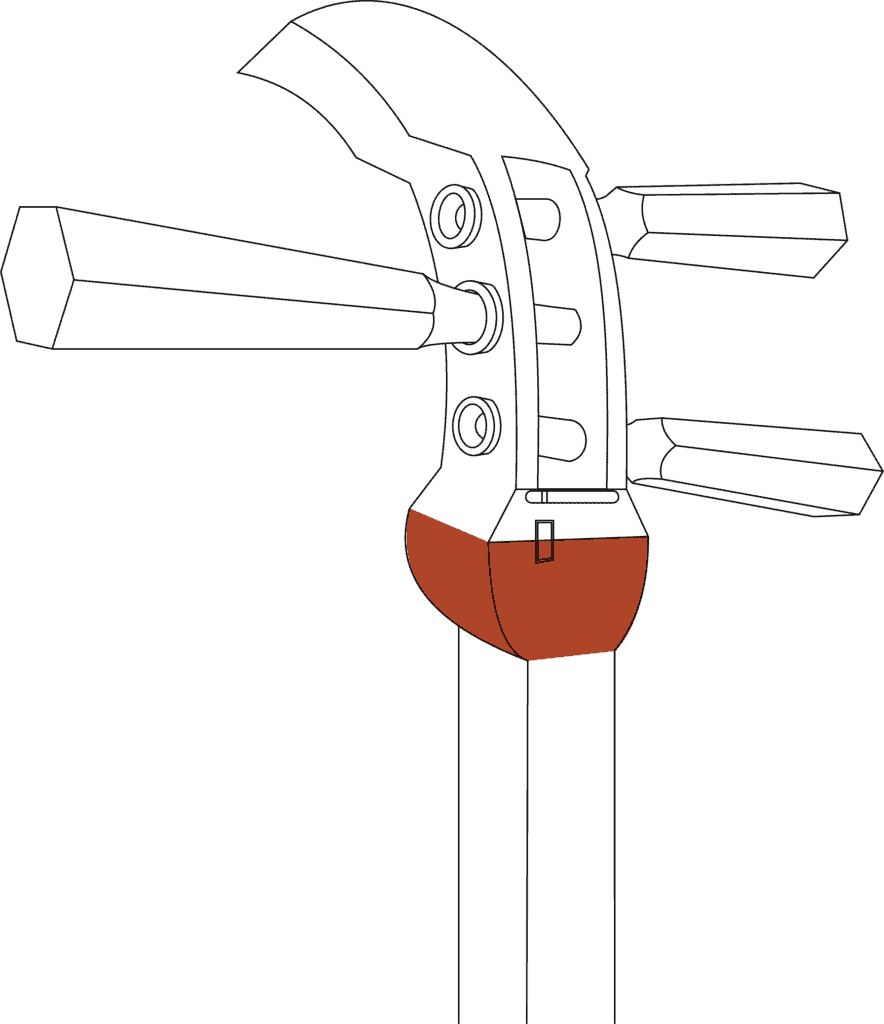
Chibukuro
撥 | ばち
Parts | Rounded bulge at the end of the tenjin at the joint to the sao (neck).

Chirichiri
ちりちり

Technique | Ornamental melodic figure. A rolling, continuous alternation of a few notes that creates a shimmering sound texture.

Chiritara
ちりたら

Technik | Synonym: Tsuretara. Onomatopoetic term for a characteristic rhythmic-melodic pattern in Tsugaru Shamisen. The classical form is 4300, played as 43ハ0ス0ハ. When repeated frequently, this pattern becomes a hypnotic rolling sound carpet—heard in every Jongara Bushi!

Chūzao
中棹 | ちゅうざお

Style | Shamisen with a medium neck width. Instruments for Minyō and Jiuta are generally classified in this category. The term refers solely to the width of the neck, not to other characteristics of the instrument.

D

Danchigai Mizo
段違溝 | だんちぎみぞ

Parts | Stepped groove joint for nihon mizo joints. Most advanced groove joint, with offset steps that lock neck pieces precisely. Complex to craft but highly durable and stable. Favored in professional instruments. The more simple kind is called hira mizo.

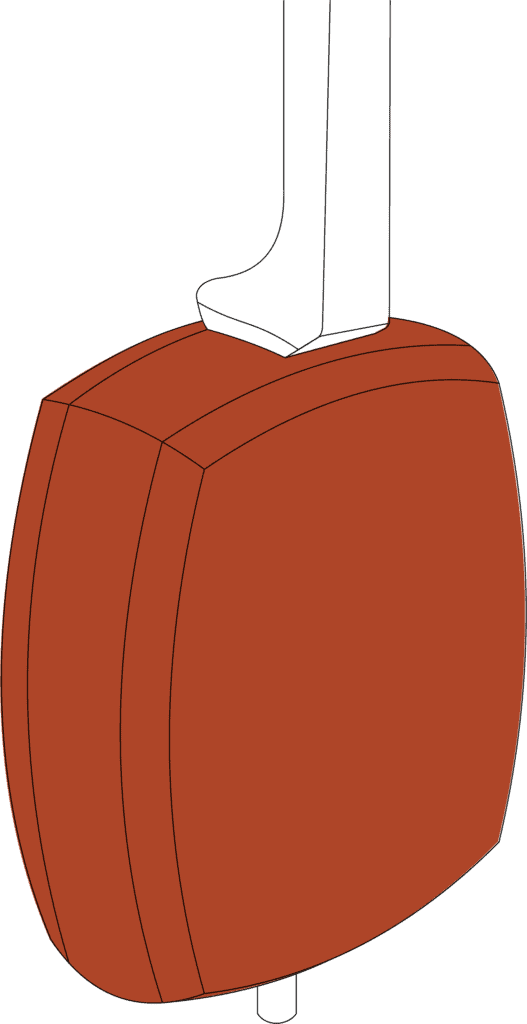
胴 | どう
Parts | Body of the shamisen. Hollow wooden resonator covered with stretched skins on the front and back, producing the instrument’s tone.
Dou, body of the shamisen. Shamisen sound box.
Dōgomu
胴ゴム | どうゴム
Accessory | Rubber pad underneath the . Rubber mat on the lower edge of the dō. Provides better grip of the instrument on the thigh while playing.
picture of a brown dougomu on a transparent background
Dōkake
胴掛け | どうかけ
Accessory | Removable, sturdy body protector. Acts as a barrier between the player’s skin and the shamisen’s skin. Also serves as a decorative element, giving the instrument a personalized touch.

E

Ebio
蝦尾 | えびお
Parts | The rounded shape of the endpiece on the tenjin (head) of the shamisen. Translates literally to “shrimp tail”.
En Sawari
円さわり | えんさわり
Parts | Round variation of the azuma sawari. The movable block is round instead of rectangular. Installation is easier and therefore cheaper than the square azuma sawari.

F

Fujaku
ふじゃく | 譜尺
Accessory | A strip-shaped marker used to indicate positions (tsubo) along the shamisen neck, usually numbered from 1 to 18. Note that these markers are often not precisely accurate. For more details on marking positions, see the full explanation – including a video demonstration.
Futozao
太棹 | ふとざお
Style | Shamisen with a wide neck. Gidayū and Tsugaru Shamisen are classified in this category. Not only is the neck broader on these instruments, but the body is also slightly larger with thicker walls, and the tuning pegs are sturdier, providing visual balance.

G

Gidayū
義太夫 | ぎだゆう
Genre | Narrative performance style accompanied by shamisen. Originating in bunraku puppet theater, it features dramatic storytelling with expressive shamisen playing and vocal recitation.
Gin-Hozo
銀ほぞ | ぎんほぞ
Parts | Refinement of the neck joint in which the mortise (hole) of the connection is lined with a softer metal such as aluminum or a silver-colored alloy. This reinforcement provides high stability, precise fitting, and durability, as the heavily stressed contact surface is less prone to wear. The more refined variant of this construction is the kin-hozo.
Gen
弦 | げん
Accessory | Alternative term for shamisen strings, mainly used in the jiuta tradition. The more common term is Ito.
Godai Minyō
五大民謡 | ごだいみんよう
Genre | Literally “The Five Great Folk Songs” — a group of celebrated Minyō songs from the Tsugaru region that form the core of virtuoso Tsugaru Shamisen repertoire: Tsugaru Jongara Bushi, Tsugaru Aiya Bushi, Tsugaru Sansagari, Tsugaru Yosare Bushi, and Tsugaru Ohara Bushi.
Gottan
ごったん
Style | Kyūshū-style variation of shamisen with a wooden body instead of a skin-covered , producing a softer, mellower tone, traditionally used in regional folk music. Is played with bare fingers instead of using a pick.

H

Hajiki
弾き | はじき
Technique | Playing technique in which a note is produced by plucking (pull-off) with the sao hand while the bachi rests during the motion. Indicated in bunkafu notation with the Katakana-sign for “ha” [ ハ ] underneath the desired pitch position.
Hakamagoshi
袴腰 | はかまごし
Parts | Oblique elements at the head (tenjin) located at the top and bottom ends of the pegbox (itogura).
Han-Hozo
半ほぞ | はんほぞ
Parts | Simplest form of neck joint, where a pin on one part fits into a hollow in the counterpart, without additional guiding grooves. Less stable than the grooved variants, it is often found on inexpensive and older instruments. The more elaborate groove-based types are ippon mizo, nihon mizo, and danchigai mizo.
Hatomune
鳩胸 | はとむね
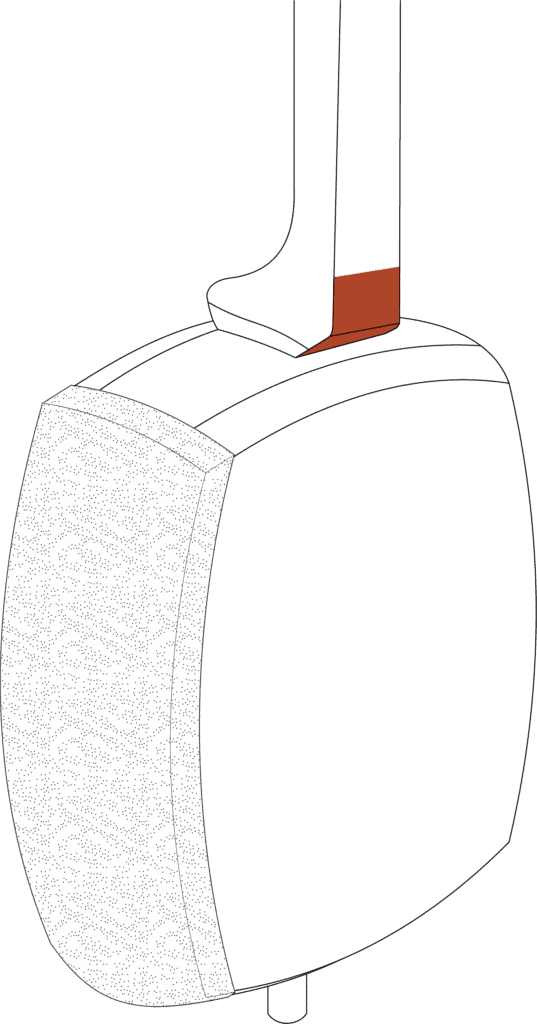
Parts | Gentle curve at the end of the fingerboard, just before the neck (sao) meets the body (). In Jiuta and Tsugaru Shamisen, the fingerboard ends in a sharper edge, allowing easier access to higher positions.
illustration of a shamisen with highlighted part.
Hauta
端唄 | はうた
Genre | Urban shamisen song style of the Edo period. Often playful, witty, or sensual, with compact lyrical form. Considered a predecessor to kouta, but generally broader and less refined in style.
Hira Mizo
端唄 | はうた
Parts | Uniform groove neck joint. One or more straight grooves cut into the neck segment(s) to guide the mating part of the neck. Provides better alignment and stability than a simple pin-and-hole (han-hozo), but without the stepped offsets of danchigai mizo. Common in mid- to higher-quality instruments.
Hizagomu
膝ゴム | ひざごむ
Accessory | Rubber pad placed on the knee for playing stability. The rests on it to provide better grip and support while playing.
Honchōshi
本調子 | ほんちょうし
Theory | Traditional standard shamisen tuning, usually C3–F3–C4. Serves as the reference tuning from which the other two traditional shamisen tunings niagari (raised second string) and sansagari (lowered third string) are derived.
Hosozao
細棹 | ほそざお
Style | Shamisen with a narrow neck. Typically used in nagauta, kouta, and hauta styles. Matching their slender necks, these instruments have smaller bodies, and more delicate tuning pegs than the other build types chūzao and futozao.

I

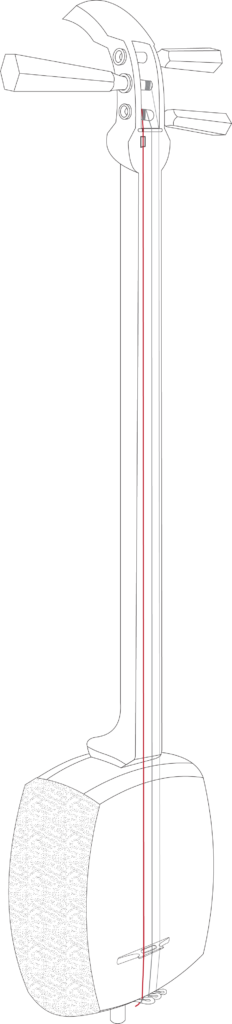
Ichi no Ito
一の糸 | いちのいと
Accessory | Thickest shamisen string, literally translates to “first string.” It is usually tuned to C3. This string is attached to the upper right tuning peg (itomaki) and lies all the way to the left on the instrument, making it the string closest to the player. The other two strings are called Ni no Ito and San no Ito. Depending on the type of instrument, style, and personal preference, specific gauges are chosen for each string.
schematic illustration of a shamisen with highlighted thick string (ichi no ito)​​​
Ippon Mizo
一本溝 | いっぽんみぞ
Parts | Specification of the neck joint featuring a straight groove for alignment. More stable than the han-hozo type but less precise and durable than the double-groove (nihon mizo) or stepped-groove (danchigai mizo) joints.
Ito
糸 | いと
Accessory | General term for shamisen strings. The individual strings are numbered: first string (ichi no ito), second string (ni no ito), and third string (san no ito). All three strings have different thicknesses and are tuned to different pitches. An alternative reading that is especially common in Jiuta contexts, is “Gen”.
Itogura
糸倉 | いとぐら
Parts | Pegbox. The part of the head (tenjin) that holds the tuning pegs and wound up strings.
Itomaki
糸巻き | いとまき
Parts | Tuning peg. Conically shaped and usually made of wood, traditionally zōge for professional instruments. Depending on construction, pegs may be slimmer or sturdier. They hold their position through friction, similar to violin or cello pegs.
Illustration of a shamisen's head (tenjin) with highlighted itomaki (tuning pegs).
Itomichi
糸道 | いとみち
Theory | Small notch in the index fingernail used to stabilize the hand when shifting on the skinny string (san no ito).

J

Jiuta
地唄 | じうた
Genre | Literally translates to “songs of the country”); a highly sophisticated genre of Japanese chamber music that emerged in 18th-century Kyoto and Osaka, representing the pinnacle of shamisen artistic expression. Unlike other shamisen styles that serve as vocal accompaniment or theatrical music, jiuta developed as refined instrumental music, often in ensemble (sankyoku) with koto and shakuhachi. Characterized by complex ornamentation, classical structural forms, and integration of classical Japanese poetry, jiuta was cultivated in the cultural salons of wealthy merchants and aristocrats, developing regional variations between Kyoto’s courtly refinement and Osaka’s more dramatic style.
Jōruri
地唄 | じうた
Genre | The term originates from “Jōruri-hime monogatari,” a 15th-century tale that was one of the first to be sung to shamisen accompaniment. Over time, it evolved into a general term for narrative vocal music. By the Edo period, jōruri split into several stylistic schools, including Gidayū-bushi (for Bunraku theater), Tokiwazu, Kiyomoto, and Shinnai. Each style differs in vocal technique, shamisen timbre, and dramatic focus, but all share the principle of expressive narration intertwined with instrumental commentary.

K

Kaku-Ana
地唄 | じうた
Parts | Rectangular opening in the center of the short side of the (body), through which the nakago (spike-part of the neck) is inserted.
Kamashi
かまし
Technique | Kamashi is a hallmark technique of Tsugaru Shamisen. It consists of a short, repeating phrase that combines bachi and sao-hand techniques to create a rolling, shimmering sound. Widely used to build tension, it’s a staple element in every performance of Jongara Bushi.
Kamigoma
上駒 | かみごま
Parts | The nut of the shamisen, typically made from metal such as brass. Positioned at the very top of the fingerboard, just before the itogura (pegbox), the kamigoma supports the strings and defines their vibrating length. It protects the neck from wear and ensures a crisp tone.
Kamizao
上棹 | かみざお
Parts | Upper section of the shamisen neck for mitsuori shamisen (three-piece neck) and niori shamisen (two-piece neck).
Karitsugi
仮継 | かりつぎ
Accessory | Protective neck joint cap made from a light wood such as magnolia. It is fitted over the neck joints when transporting a shamisen with the sao disassembled. Each karitsugi is custom-made for its specific instrument, preventing damage to the joint. Unfortunately, this makes it impossible to simply buy a replacement for this item.
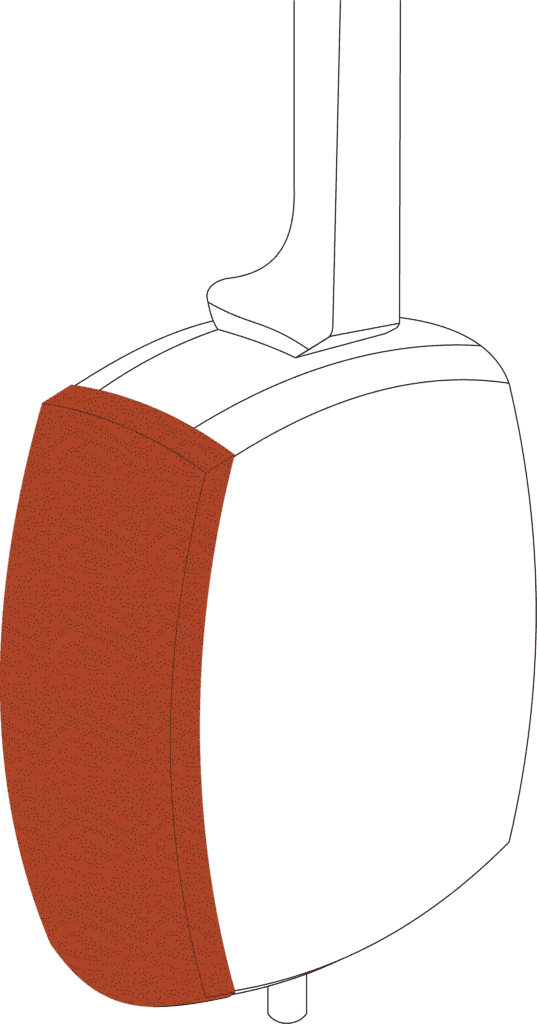
Kawa
皮 | かわ
Parts | The membrane stretched over the shamisen’s body () serves as the resonating surface. Traditionally, shamisen were covered with natural cat or dog skin. Today, alternative natural materials such as goatskin are gaining popularity. Most notably, synthetic skins have been developed, which are more resistant to humidity and temperature fluctuations. The choice of material, the thickness of the skin, and the tension all have a significant impact on the instrument’s tonal character — from the strong, percussive attack of Tsugaru Shamisen to the softer, more delicate tone favored in Nagauta or Jiuta.
Illustration of a shamisen's body (dou) with highlighted skins (kawa).
Keshi
消し | けし
Technique | A sao-hand muting technique used in shamisen playing to stop a the string’s vibration. Keshi is often applied immediately after striking a note with the bachi to create a staccato effect or to emphasize a rest, adding rhythmic precision and expressive nuance.
Kin-Hozo
金ほぞ | きんほぞ
Parts | Neck joint in which the mortise (hole) of the connection is reinforced with brass or a similar hard metal. When taking apart the neck a lot, contact surface between mortise and peg wears down after a while. This reinforcement provides increased stability, precise fitting, and durability. Commonly used in higher-quality instruments. The slightly cheaper variation is called gin-hozo.
Kiyomoto
清元 | きよもと
Genre | Elegant and expressive shamisen music, developed in Edo from Tokiwazu style. Known for its higher vocal register, lyrical quality, and refined ornamentation. Frequently used in Kabuki to underscore delicate, emotional, or sensual scenes.
甲 | こう
Parts | Literally translates to “carapace”; the rounded, raised area on the top of the tenjin; the crown/cap part above the peg box (itogura).
kōki
紅木 | こうき
Material | Dark, extremely dense hardwood used for professional shamisen. The name literally means “red wood,” referring to its deep reddish hue that darkens further to an almost black shade with age. It is valued for its tonal qualities and aesthetic beauty. Because kōki is rare and. Nowadays, kōki has become very scarce. If the wood grain is especially beautifully figured, it’s called tochi kōki.
koma
駒 | こま
Accessory | The bridge of the shamisen, a removable piece placed between the strings and the skin of the . Made from materials such as zōge, bone, bamboo, or plastic, the koma transmits string vibrations to the body of the instrument. Its height, weight, and material strongly affect the sound. Read more, watch the video.
schematic illustration of a tsugaru shamisen koma at an 45˚ angle view.
Komagake
駒掛け| こまがけ
Technique | Synonym to Nezumi. Playing technique in which the little finger of the bachi hand rests on the lower wing of the koma (bridge) while striking with the bachi. This dampens the resonance and produces a quieter but very clear sound. Particularly used in Tsugaru Shamisen to create dynamic contrasts and tonal variety. Note: the movement range of the bachi hand is limited by the little finger being anchored at the koma.
Koma-Ire
駒入れ | こまいれ
Accessory | Container for bridge (koma) storage.
Kouta
小唄 | こうた
Genre | Refined shamisen song style that developed in the late Edo to Meiji periods. Short, lyrical, and often subtle in nuance. Compared to hauta, kouta is more polished, intimate, and stylistically sophisticated.
Kyōjaku
強弱 | きょうじゃく
Technique | Literally “strong and weak.” Refers to the alternating pattern between stronger (louder) and softer (quieter) tones, created by alternating strikes in ushirobachi and maebachi positions. This steady repetition adds rhythmic drive and dynamic nuance to the melody, giving the music a lively, breathing quality.

M

Maebachi
前バチ | まえばち
Technique | Playing the bachi in the front part of the body, close to the rim. This stroke is fundamental for producing a delicate, muted sound and is complimentary to the forceful ushirobachi. Maebachi is usually not indicated in the notation. In modern scores, you may find a square bracked or a rectangles around the maebachi parts, but there’s no standard sign for it. In my notations, I mark maebachi with a light blue square bracket.
Maru-Ana
丸穴 | まるあな
Parts | The round hole located on the lower short side of the shamisen’s dō (body), through which the nakagosaki (tip of the neck spike) passes. This hole secures and aligns the neck with the body. Counterpart to the square hole (kaku-ana) on the opposing short side of the body.
Mawashi
回し | まわし
Technique | Repetitive, rolling melodic pattern, typically appearing at the end of a Tsugaru Jongara Bushi, but also found in other pieces. A combination of hajiki and sukui on positions 0‑3‑0‑3 on the thin string (san no ito) produces a shimmering sound.
Mijikate
短手 | みじかて
Parts | The short lateral sides of the shamisen body (). Counterpart to the long sides (nagate).
Minyō
民謡 | みんよう
Genre | Regional Japanese vocal folk songs often accompanied by shamisen. Emphasizes local melodic patterns, rhythms, and vocal styles, traditionally passed down orally through communities. / Regional Japanese folk songs, often accompanied by shamisen. Rooted in work songs, festival chants, and local customs, min’yō expresses the life and identity of communities. Shamisen accompaniment ranges from simple rhythmic support to virtuoso improvisation, depending on region and style.
Mitsuori
三折 | みつおり
Style | On a mitsuori shamisen, the neck (sao) is divided into three sections joined by precisely crafted joints that appear almost seamless. The neck can be disassembled for transport, greatly reducing the risk of damage. Necks that cannot be taken apart are called nobezao.

N

nagabukuro
長袋 | ながぶくろ
Accessory | Soft, flexible protective cover for shamisen made from silk, cotton, or synthetic fabric. Used to protect against dust and scratches — not intended for transporting the instrument. Here is an article and a video on the topic.
Read the article and watch the video for more detail.
Nagate
長手 | ながて
Parts | The long lateral sides of the shamisen body (). Counterpart to the short sides (mijikate).
Nagauta
長唄 | ながうた
Genre | One of the major primary genres of shamisen music. Originated in Edo as accompaniment for kabuki theater. It features long, elaborate forms with instrumental interludes, vocal passages, and narrative elements. Known for its elegance and dramatic versatility. Performed on hosozao shamisen.
Nakago
中子 | なかご
Parts | The spike at the bottom end of the shamisen neck (sao) that runs through the body () from the square hole (kaku-ana) to the round hole (maru-ana). Provides structural support and alignment, ensuring stability of the instrument.
Nakagosaki
中木先 | なかごさき
Parts | Tip of the nakago that protrudes from the body () at the very bottom of the instrument. This is where the string holder (neo) gets put on.
Nakazao
中棹 | なかざお
Parts | Middle section of the shamisen neck for mitsuori shamisen (three-piece neck).
Nejime
音締め | ねじめ
Technik | Bachi technique used to produce an especially muted tone. The little finger touches the lower wing of the koma when striking the string, while the side of the thumb lightly brushes the string during the stroke.
Neo
音緒 | ねお
Accessory | The string holder of the shamisen. A knot, skillfully tied from a long, sturdy cord, that secures the shamisen strings. Both practical and decorative, neo come in all imaginable colors.
schematic illustration of the japanese instrument shamisen's string holder (neo)
Neo Bekkō
ネオ鼈甲 | ネオべっこう
Material | Synthetic, sustainable, and vegan alternative to bekkō, primarily used for making bachi blades. Neo-bekkō has almost the same flexibility as natural bekkō, but produces slightly different tonal nuances.
Nezumi
音澄み | ねずみばち
Technique | Synonym to komagake. Technique for an especially quiet yet clear tone. Playing technique in which the little finger of the bachi hand rests on the lower wing of the koma (bridge) while striking with the bachi. This dampens the resonance and produces a quieter but very clear sound. Particularly used in Tsugaru Shamisen to create dynamic contrasts and tonal variety. Note: the movement range of the bachi hand is limited by the little finger being anchored at the koma.
Ni no Ito
二の糸 | にのいと
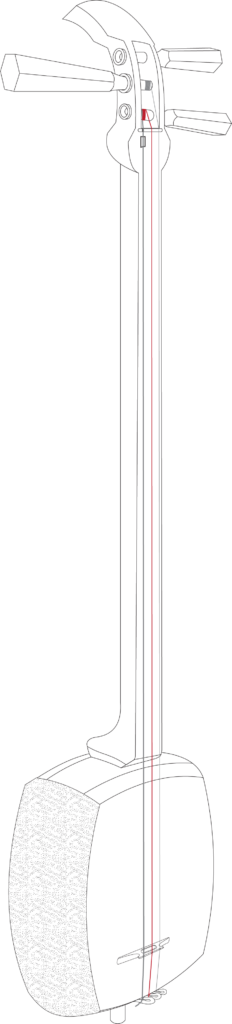
Accessory | Second string of the shamisen, the middle string, with a medium-high pitch. It is attached to the second or third tuning peg (itomaki) and connected to the middle eyelet of the neo. This string can be made of silk or synthetic fiber. Literally translated as “second string.” Depending on tuning, it is tuned either a fourth or a fifth above the thick string (Ichi no Ito), usually to F3 or G3. On the instrument, the string is positioned on the upper right peg and lies on the far left side of the instrument, closest to the player. The other strings are called Ichi no Ito and San no Ito. Depending on the instrument type, style, and personal preference, specific gauges are selected for the different strings.
Schematische Illustration einer Shamisen mit rot hervorgehobener mittlerer Saite (Ni no Ito).​​​
Niagari
二上り | にあがり
Theory | Niagari is the second of the three common main tunings for shamisen. Literally translated, the term means “second raised” and refers to the higher pitch of the second string (ni no ito) relative to the standard tuning Honchōshi. The middle string is raised by a whole tone, usually resulting in C3–G3–C4. The other two traditional shamisen tunings are Honchōshi (standard tuning) and Sansagari (lowered third string).
Very common tuning for Tsugaru Shamisen repertoire.
Here’s an overview of all three tunings as an article and video.
Tips for tuning here as an article and video.
Here’s a brief demonstration of how this tuning sounds on the shamisen.
Nihon Mizo
二本溝 | にほんみぞ
Bauteil | Doppelte Nutverbindung. Verfeinerte Halsverbindung mit zwei parallelen Nuten, die mehr Stabilität und Haltbarkeit bietet als die einfacheren Ausführungen Ippon Mizo und Han-Hozo. Bietet präzise Ausrichtung und stabilen Halt. Mittlerweile Gängiger Standard bei Instrumenten mittlerer bis hoher Qualität. Bietet größere Kontaktfläche und bessere Ausrichtung.
Nobezao
延べ棹 | のべざお
Bauweise | Bei einer Nobezao Shamisen ist der Hals (Sao) aus einem zusammenhängenden Stück Holz gefertigt. Der Hals kann zum Transport nicht auseinander genommen werden. Im Vergleich dazu lässt sich bei einer Mitsuori Shamisen der Hals in drei Teile zerteilen.

O

Omotegawa
表皮 | おもてがわ
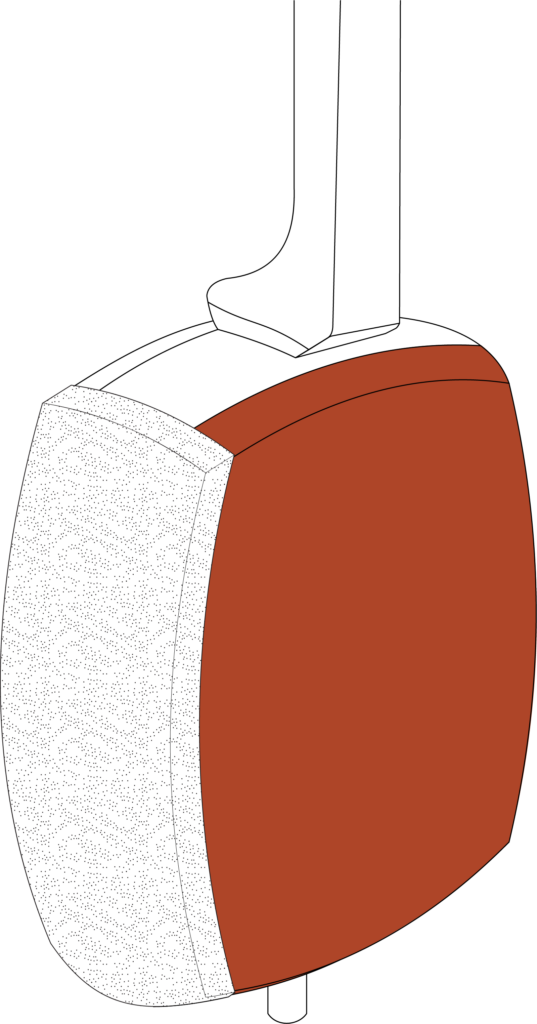
Parts | Literally “front skin.” Refers to the tightly stretched skin (kawa) on the front side of the body (), facing away from the player, which supports the koma with the strings (ito). The bachi is used to play on the front skin. Usually, the front skin is slightly tighter than the back skin (uragawa).
schematic shamisen body illustration with doukake and red highlighted front skin.​​
Oshibachi
押しバチ | おしばち
Technique | Notation symbol: ⎡ or ⎦ — literally “pressure bachi,” synonym for suberi. Using this technique, two adjacent strings (ito) are played in sequence. The bachi strikes the first string, remains in its lowest position on the skin after the strike, and then the thumb presses the next string to sound it. The two notes played with this technique are marked with a right-angled hook above or below the notes. Watch a short video demonstration from different angles.

S

San no Ito
表皮 | おもてがわ
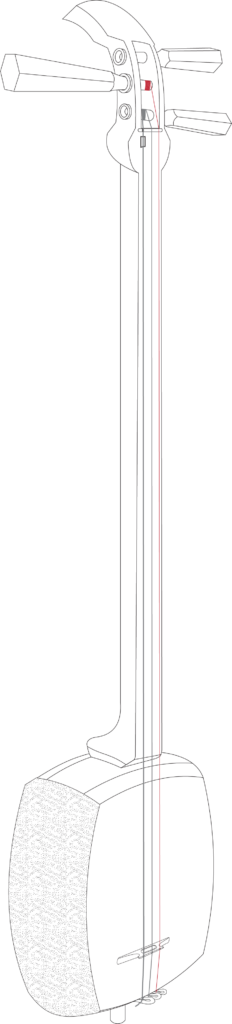
Accessory | Third string.Third string (ito) of the shamisen, the thinnest string with the highest pitch. It is attached to the second or third tuning peg (itomaki) and is positioned closest to the player’s knee. This string can be made of silk or synthetic fiber. Literally translated as “third string.” Depending on tuning, it is tuned either a fourth or a fifth above the middle string (Ni no Ito), usually to B3 or C3. The other strings are called Ichi no Ito and Ni no Ito. Depending on instrument type, style, and personal preference, specific gauges are selected for each string.
schmematic illustration of a shamisen with red highlighted skinny string (san no ito)​​​
Sankyoku
三曲 | さんきょく

Genre | Literally “three pieces.” Refers to instrumental ensemble music for koto, shakuhachi, and shamisen, developed during the Edo period. Known for its elegant chamber style and intricate interplay between instruments, often performed in salons or by geisha.

Shinnai
新内 | しんない

Genre | Narrative shamisen genre that emerged in mid-18th century Edo (modern Tokyo), founded by the blind musician Tsuruga Shinnai II. The genre combines vocal storytelling with shamisen accompaniment, typically performed solo or with minimal instrumental support, focusing on tragic tales of lovers and psychological drama for intimate audiences. The songs are characterized by fluid phrasing, subtle ornamentation, and restrained bachi techniques that prioritize the narrative over flashy instrumental display. The style is typically played on chūzao and hosozao sized shamisen.

Suberi
滑り | すべり

Technique | Sign in the notation: ⎡ or ⎦ – literally “glide”, synonym to oshibachi.

Using this technique, two adjacent strings (ito) are played in sequence with the bachi. The bachi strikes the first string, remains in its lowest position on the skin after the strike, and then the thumb presses the next string to sound it. The two notes played with this technique are marked with a right-angled hook above or below the notes.

Check out this short video demonstration from different angles.

Suri
摺り | すり

Technique | Notation symbol: horizontal curve and sometimes the katakana addition [ スリ ] – not to be confused with sukui [ ス ]. Literally “slide.”

Considered a sao-hand technique, but really just the sound of two notes connecting through a shift without striking the string with the bachi. It sounds like a gliding note, but there’s no particular technique involved other than not hitting the string. The effect is elegant and great for adding some dramatic flair.

T

Tataki
叩き | たたき

Technique | Fundamental striking technique in which the bachi is struck rapidly through the strings down to the skin of the body (). This produces a percussive, snapping sound in addition to the melodic tone. Particularly characteristic of Tsugaru Shamisen, where tataki underscores the driving, energetic character of the music. With tataki, the strongest possible sound on the shamisen is achieved.

Tenjin
天神 | てんじん
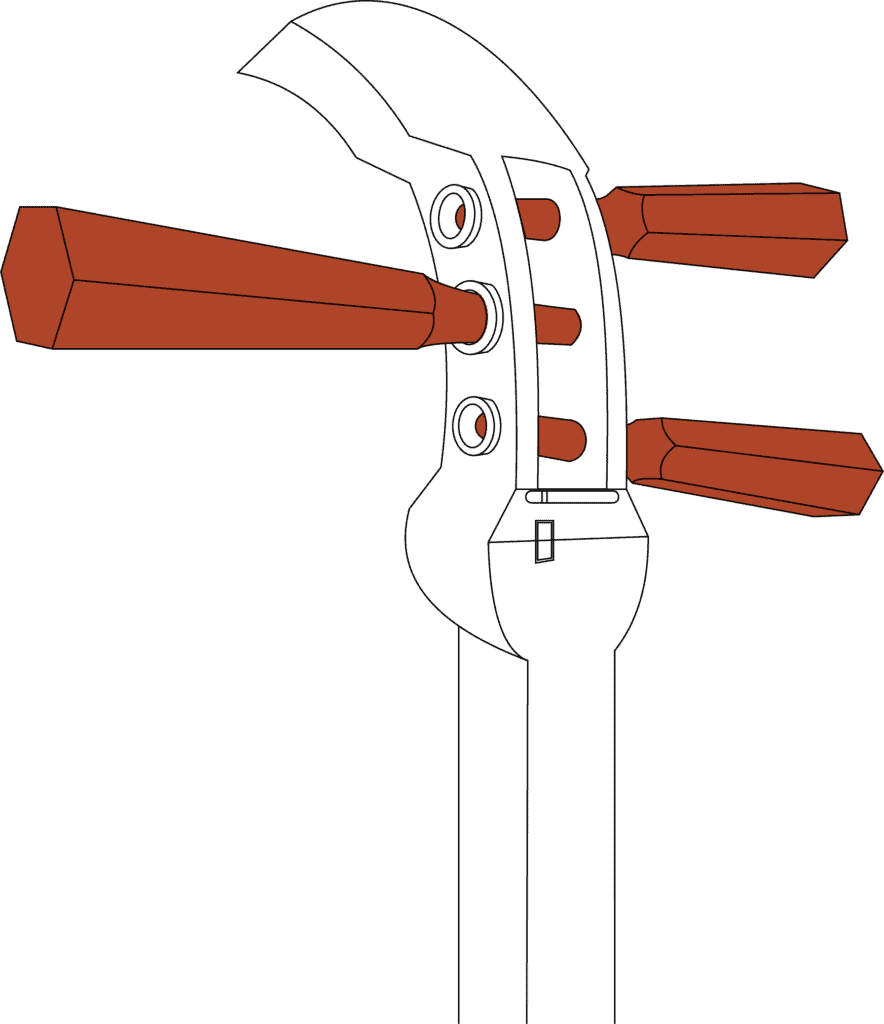
Parts | Topmost part of the instrument, the “head,” holding the tuning pegs (itomaki). The tenjin is made separately from a thicker piece of wood to create its elegant curve. With a double swallow-tail joint, the neck (sao) and tenjin are seamlessly joined. The joint is fixed with glue.
schmematic illustration of the shamisen head ​​​
Tochi
トチ

Material | In shamisen-making, the term tochi refers to wood with particularly beautiful and complex figuring—naturally swirling, fiery patterns that create impressive visual effects. Because of this natural beauty and rarity, tochi is highly prized by craftsmen and collectors.

Tokiwazu
常磐津 | ときわず

Genre | Narrative shamisen music for Bunraku and Kabuki. Combines singing, storytelling, and shamisen accompaniment. Integrates dramatic narration with musicality, often in long scenes.

Tsubo
壺 | つぼ

Theory | Pitch position on the shamisen neck (sao). In bunkafu notation, those positions are represented by numbers. Players memorize tsubo placements through ear training and muscle memory, as the shamisen lacks frets or other markers. It’s common to mark positions with stickers or a fujaku strip when you are a beginner.

Tsugaru Shamisen
津軽三味線 | つがるしゃみせん

Genre | Virtuoso shamisen genre from Aomori in northern Japan. Originated in the late 19th century with blind traveling musicians (bosama) and developed into a highly improvisatory style, characterized by fast tempos, percussive playing, and dramatic dynamic shifts. Played in folk, solo, and cross-genre contexts. Tsugaru Shamisen is typically performed on instruments with a wide neck (futozao), using a small bachi and low koma.

Tsuretara
つれたら

Technik | Synonym: Chiritara​. Onomatopoetic term for a characteristic rhythmic-melodic pattern in Tsugaru Shamisen. The classical form is 4300, played as 43ハ0ス0ハ. When repeated frequently, this pattern becomes a hypnotic rolling sound carpet—heard in every Jongara Bushi!

U

Uchi
打ち | うち

Technique | Sign in the notation: katakana for “U” [ ウ ] underneath the position; literally: strike.

Shamisen technique of the sao hand, also called “hammer-on” (like on a guitar). The sound is produced without the bachi. The finger is pressed forcefully and decisively onto the indicated note after the previous note has already been set in vibration. The note played with Uchi is always higher than the previous note and on the same string. The sound is quieter than with other techniques.

Watch a detailed video on Patreon.

Uragawa

裏皮 | うらがわ
Parts | Literally “back skin.” Refers to the tightly stretched skin (kawa) on the back of the body () facing the player. Usually slightly less tense than the front skin (omotegawa).
schematic illustration of a shamisen body with doukake and highlighted back skin (uragawa).​​​
Ushirobachi
後撥 | うしろばち

Technique | Not indicated in the notation.

Literally “back bachi strike.” The bachi is played in the center of the skin (kawa) for this technique. This stroke is fundamental for producing a particularly strong, resonant sound and serves as the counterpart to the soft, muted maebachi.

Uta
唄 | うた

Theory | Part of many shamisen titles, meaning “song.” General term for a piece where the vocal melody is central and the shamisen provides accompaniment. Appears in both classical (Jiuta, Nagauta) and folk (Minyō) contexts. The term signals that the voice leads the musical expression and has the primary focus, even if the shamisen part is elaborate.

Y

Yubikake
指掛け | ゆびかけ
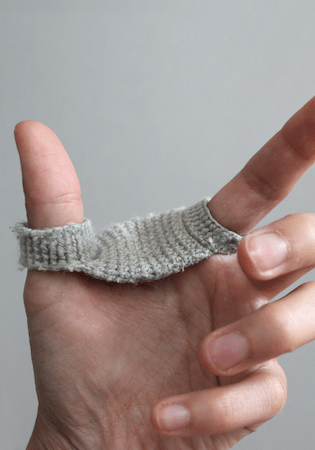
Accessory | Synonym for yubisuri. Crocheted or knitted finger protection for the index finger and thumb of the sao hand. It reduces friction between the hand and sao and thus enables particularly fast and smooth gliding along the neck.

I explain this in detail in this article and video.

​​​​
yubisuri
指すり | ゆびすり

Accessory | Synonym for yubikake. Crocheted or knitted finger protection for the index finger and thumb of the sao hand. It reduces friction between the hand and sao and thus enables particularly fast and smooth gliding along the neck.”

I explain this in detail in this article and video.

​​​​
Yuri
揺り | ゆり

Technique | Vibrato. Not indicated in the notation.

Expressive sao hand technique where the finger holding the string slides back and forth by moving the whole hand, causing a fluctuation in pitch. Yuri adds expressive warmth and emotional depth and helps sustain notes.

Z

Zagane
鉄金 | ざがね

Parts | Metal fitting in the holes holding the itomaki (tuning pegs) in the itogura (pegbox) of the tenjin (head). The purpose is to prevent wear from the friction between itomaki and the holes they sit in. Often shaped like flowers for hosozao shamisen. Plain design is standard for chūzao and futozao shamisen.
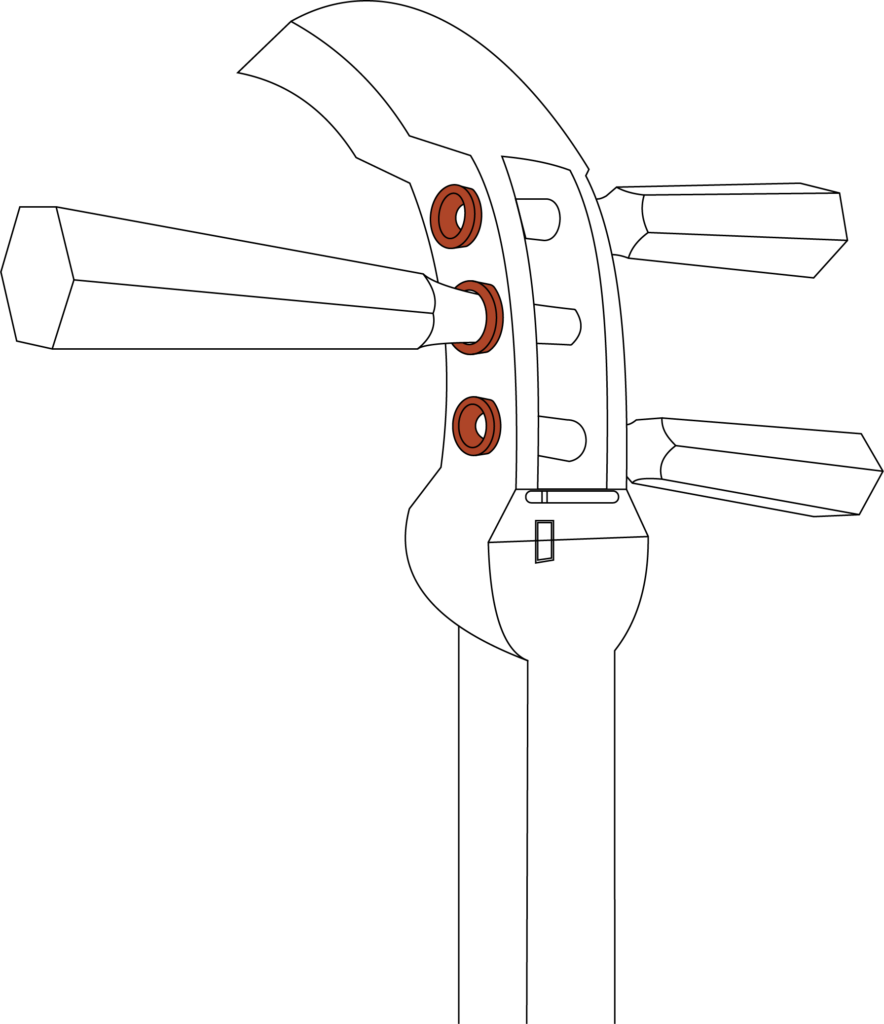
schmematic illustration of the shamisen head ​​​​​
Zengobachi
前後撥 | ぜんごばち

Technique | Not indicated in the notation.

A combined bachi striking pattern alternating maebachi and backward ushirobachi strokes. The name literally means “front-and-back bachi”. This technique is fundamental to creating continuous rhythmic drive in Tsugaru Shamisen.

Zōge
象牙 | ぞうげ

Material |

Ivory, historically used for crafting shamisen parts such as the koma (bridge) or bachi (plectrum). Praised for its smooth texture and resonant qualities, ivory was once considered a premium material. Today, due to ethical and legal restrictions, it is largely replaced by synthetic or alternative natural materials that aim to replicate its tonal characteristics without environmental or conservation concerns. An organic alternative is mammoth ivory.

Pin It on Pinterest

Share This